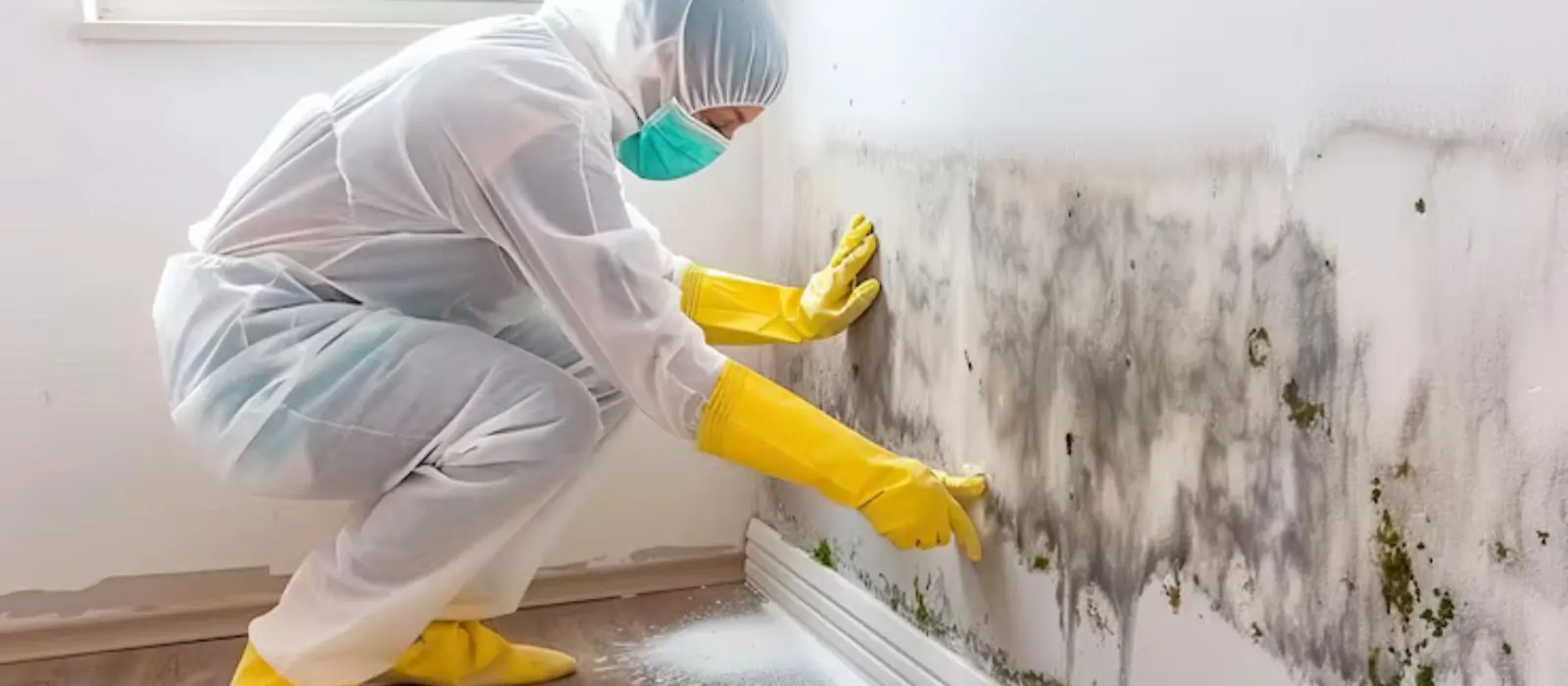
Black spots in a closet corner or a musty bathroom? Start here
Dark spots on a closet wall, a musty bathroom ceiling or a wet carpet edge usually mean moisture has been present for a while. The trade term for dealing with it is mold remediation: finding the moisture source, containing the area and removing what mold has grown on. Call (213) 776-0579 and describe what you see, where it is and what leaked.
Mold remediation in South Gate: how the process works
Mold remediation is the controlled removal of mold and the materials it has contaminated. The published industry standard is ANSI/IICRC S520 for professional mold remediation, and you can ask any company whether its crews work to it. The process follows the same order on most jobs.
- Find and fix the moisture source. Mold returns where moisture returns.
- Seal off the area with plastic barriers and set negative air with HEPA filtration.
- Remove contaminated porous materials, such as drywall, carpet and insulation.
- Clean hard surfaces and framing with HEPA vacuums and damp wiping.
- Dry the space and confirm moisture readings are normal.
- Verify the result, often with an independent tester, before rebuilding.
Moisture work often starts first. If the cause is a recent leak, water mitigation dries the structure before remediation begins, because removing mold from a wall that is still wet fixes nothing.
Mold removal and black mold cleanup
People often say black mold, but color does not identify a species, and many molds look dark. A lab test is the only way to name one, and for most jobs the plan is the same either way: remove the moisture, contain the area and remove the growth. This page makes no health claims, and questions about symptoms belong to a physician.
EPA guidance suggests that mold covering less than about 10 square feet, roughly a three-by-three-foot patch, can often be cleaned by the occupant on nonporous surfaces. Larger areas, mold on drywall or carpet, and any mold near the HVAC system call for a professional. Never mix cleaning chemicals, and never sand or brush mold dry, because that spreads spores through the air.
Mold after water damage
Mold after a water loss is common when wet materials stay wet. EPA guidance says to dry or discard wet materials within 24 to 48 hours to limit growth. Past that point, check behind baseboards, under carpet pad and inside closets, where moisture hides.
Small leaks cause plenty of mold. A condensate line from an air conditioner draining into a closet wall, a toilet seal weeping into a subfloor or a slow drip under a sink can feed growth for months before anyone sees it. If a leak caused the mold, repair of the finished surfaces comes after remediation, and the water damage repair page covers that stage.
Testing, inspection and clearance
An inspection looks at where moisture is, how far visible growth extends and which materials are affected. Moisture meters and a thermal imaging camera help, because mold often hides behind surfaces. Testing is a separate question from removal, and having a lab sample does not remove anything.
Clearance is the check after remediation that confirms the work is done. Many owners hire an independent tester who is not paid by the remediation company, so the result is not self-graded. This matters most when a home is being sold or refinanced, because lenders set their own requirements. Ask the lender which document it wants, since no company can promise a lender will accept a result.
| Situation | Next step | Professional help? |
|---|---|---|
| A few small spots on a tile or painted surface | Fix the moisture, clean per EPA guidance with gloves and a respirator | Not always |
| Mold on drywall, ceiling tiles or carpet | Stop the moisture source and have the area assessed before disturbing it | Yes |
| Musty smell with no visible growth | Check closets, wall cavities and under sinks with a moisture meter | Often |
| Mold after a flood or sewage backup | Treat as contaminated, keep occupants out and call | Yes |
| Mold found before a home sale or loan | Ask the lender what it requires, then plan remediation and clearance | Yes |
What you can do safely while you wait
- Fix or shut off the water source and keep the area dry.
- Take dated photos of the spots and the leak for your insurer or landlord.
- Keep children and pets out of the room and do not run a fan across the mold.
- Do not scrub, sand or spray around the mold, and never mix cleaning products.
- If you rent, give your landlord written notice with photos.
Not sure what you are looking at?
Call and describe the spots, the room and the leak. We will explain the next step.
How mold remediation is scoped and priced
- Size of the affected area and how many rooms it reaches
- Materials involved, because drywall and carpet are removed while framing is cleaned
- Containment, negative air and protective equipment needed
- Drying time if moisture is still present
- Testing or clearance, and the rebuild afterward
Insurance may cover mold that follows a sudden covered water loss and often does not cover mold from long-term leaks or neglect. Check your policy or ask your insurer. Scope and price are explained before work starts.
Questions to ask any mold company in South Gate
Licenses, permits and older homes
Ask the company what licenses it holds and look the license up on the California Contractors State License Board website. Ask for a written scope, a containment plan and how clearance will be done.
South Gate's Building and Safety Division, at 8650 California Avenue and (323) 563-9549, says permits are typically required for repair and for plumbing, mechanical and electrical work, so ask whether rebuilding after remediation needs one. Much of South Gate's housing dates from the 1910 to 1940 building period, so for a home built before 1978, also ask about testing paint before demolition.
Crews also work in Downey and Compton, where the same questions apply to the local building department.
Mold remediation questions
No honest company can promise it never will. Mold returns when moisture returns, so the lasting fix is finding and stopping the water source and confirming the structure is dry.
Color does not identify a species, so you cannot tell by looking. All visible mold should be treated as a moisture problem, and health questions belong to a physician.
No. Testing identifies or measures, while removal takes the growth and contaminated materials out. Ask what is included for your job.
Lenders set their own requirements. Ask the lender what document it wants, and plan for an independent clearance test when a sale or loan depends on it.
Notify your landlord in writing with dated photos and keep a copy. Document the leak that caused it, and check what your renters policy covers.
Small patches on nonporous surfaces can often be cleaned by an occupant with proper protection. Mold on drywall or carpet, larger areas and anything near the HVAC system need a professional assessment.