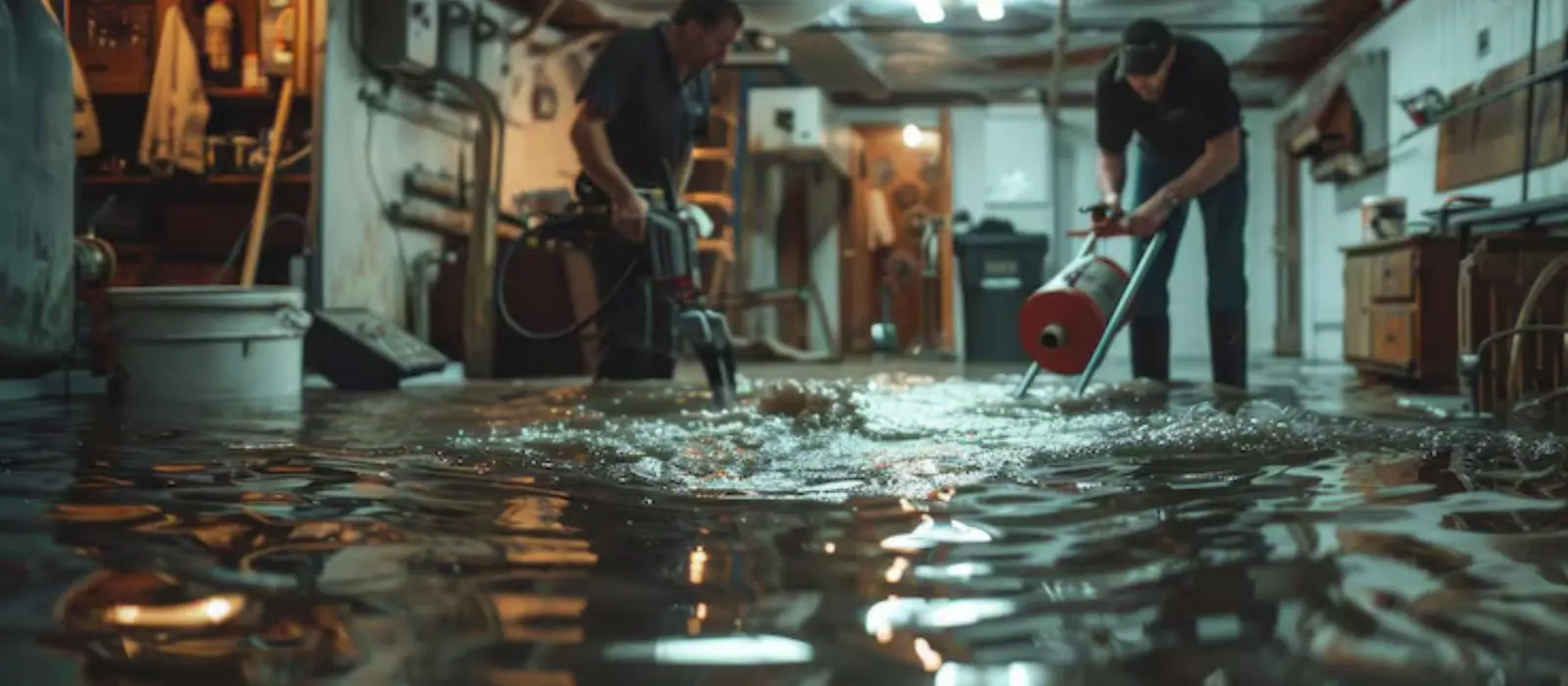
When standing water is an emergency
Standing water in a South Gate home or business is an emergency because every hour lets it soak further into drywall, subfloor and framing. Our line is open 24/7. While you wait for the crew, shut off the main water valve if the source is a supply line, turn off power to wet areas only if the panel is dry and safe to reach, and lift valuables off the floor.
The ANSI/IICRC S500 standard, the published industry reference for water damage restoration, classifies water by how contaminated it is. That classification decides what gets removed and what can be dried in place.
Emergency water removal means getting the bulk of the water out fast, using submersible pumps and truck-mounted or portable extraction units, so the drying and repair phases can start sooner. It is the first step of the work described on our water mitigation page.
| Situation | Why it cannot wait | What to do first |
|---|---|---|
| Water still flowing from a pipe, heater or appliance | More water arrives every minute and soaks more material | Shut off the main valve or the appliance valve, then call |
| Water around outlets, a panel or wiring | Electrical shock risk for anyone in the water | Stay out, cut power only if the panel is dry, call the utility or 911 first |
| Ankle-deep water in a garage or lower room | Water wicks into walls and stored belongings | Move people out, lift valuables, call the 24/7 line |
| Wet carpet or a damp floor, source fixed | Still urgent, but time to plan the extraction | Pull furniture off, open windows, call the same day |
| Sewage or dark, foul water | Contaminated water carries harmful bacteria | Keep everyone out and call. See the flood damage restoration page |
Burst pipe water damage: stop the flow, then call
A burst pipe can release a large volume of water in a short time, and the first job is stopping it. Find the main shutoff valve where the supply line enters the house or at the meter, and turn it fully off. Open a faucet at the lowest point in the house to drain the line.
Then call. The crew will find where the water traveled, because it rarely stays where the pipe broke. Water follows framing down into walls, across subfloors and into rooms below. Extraction removes the bulk, and moisture meters and thermal imaging find the wet areas you cannot see.
South Gate's city water is hard, and mineral scale can stiffen old shutoff valves. Turn your valve off and on once when nothing is wrong, so you know it works before a pipe bursts at midnight. If it will not turn, the City's water operations number is (323) 563-5796, and Golden State Water customers can call 1-800-999-4033 at any hour.
Water, power and sewage: stay out first
If water is touching an electrical panel, outlets or wiring, do not step into it. Cut power at the panel only if you can reach it while standing on dry ground. For any electrical or gas risk, call the utility or 911 before you call us.
If the water came from a sewer line, a toilet or a drain, treat it as contaminated and keep children and pets out until a crew has cleaned and sanitized the area.
Pumps, extraction units and what they remove
Different jobs need different tools. A submersible pump handles deep standing water in a garage or crawl space. A truck-mounted or portable extraction unit pulls water out of carpet, pad and hard floors. Wet vacuums finish the edges and corners a larger unit cannot reach.
- Submersible pumps for several inches of standing water
- Truck-mounted and portable extraction units for carpet, pad and floors
- Moisture meters and thermal imaging to find water behind surfaces
- Air movers and dehumidifiers once the bulk water is gone
Extraction alone does not finish the job. Materials still hold moisture after the surface looks dry, and that is why drying equipment follows. The water damage cleanup page covers what is removed and sanitized after the water is out.
What happens after the water is out
Once the standing water is gone, the crew maps the remaining moisture, sets air movers and dehumidifiers and checks readings until the structure is dry. Wet carpet pad and soaked insulation are usually removed because they dry slowly and can grow mold. Carpet itself may be saved if the water was clean and it is lifted promptly.
After drying, damaged drywall, flooring and paint are rebuilt, which is covered on the water damage repair page. We explain the scope and price before work starts, so nothing in the process should surprise you.
Cost factors for emergency water removal
- Water category: clean supply water, gray water or contaminated water
- Depth and area of the water, and how many rooms it reached
- Access: a crawl space or tight garage takes longer than an open floor
- Materials that need removal, such as carpet pad or insulation
- Equipment and monitoring days needed afterward
Insurance may cover sudden and accidental water damage like a burst pipe, while flood and slow leaks are often excluded. Check your policy or ask your insurer. To understand your own situation, call (213) 776-0579.
Emergency water removal near South Gate
We take emergency calls from South Gate and the neighboring towns. A garage flooded in Lynwood, a failed water heater in Huntington Park or a broken line in Paramount all get the same 24/7 dispatch line, and crews are sent as soon as one is available.
Emergency water removal questions
Yes. The dispatch line is answered 24 hours a day, every day, including holidays. After-hours calls get the same questions as daytime calls about the source, the water depth and any safety risk, and crews are sent as soon as one is available. Same-day response is available when crews can be spared.
Stop the source at the main valve if you can reach it, lift valuables off wet floors, open windows if the weather allows and keep people and pets out of any dark or foul water. Turn off power to wet areas only if the panel is dry and safe to reach.
Yes, using submersible pumps for standing water and extraction units for wet surfaces. Crawl spaces take longer because of tight access, and the crew will explain the scope before starting.
Sometimes. Carpet exposed to clean water and lifted quickly can often be dried. The pad underneath is usually replaced, and carpet exposed to contaminated water is generally discarded.
Removing standing water often takes a few hours, depending on depth and area. Drying afterward takes longer and is measured with moisture meters rather than guessed.