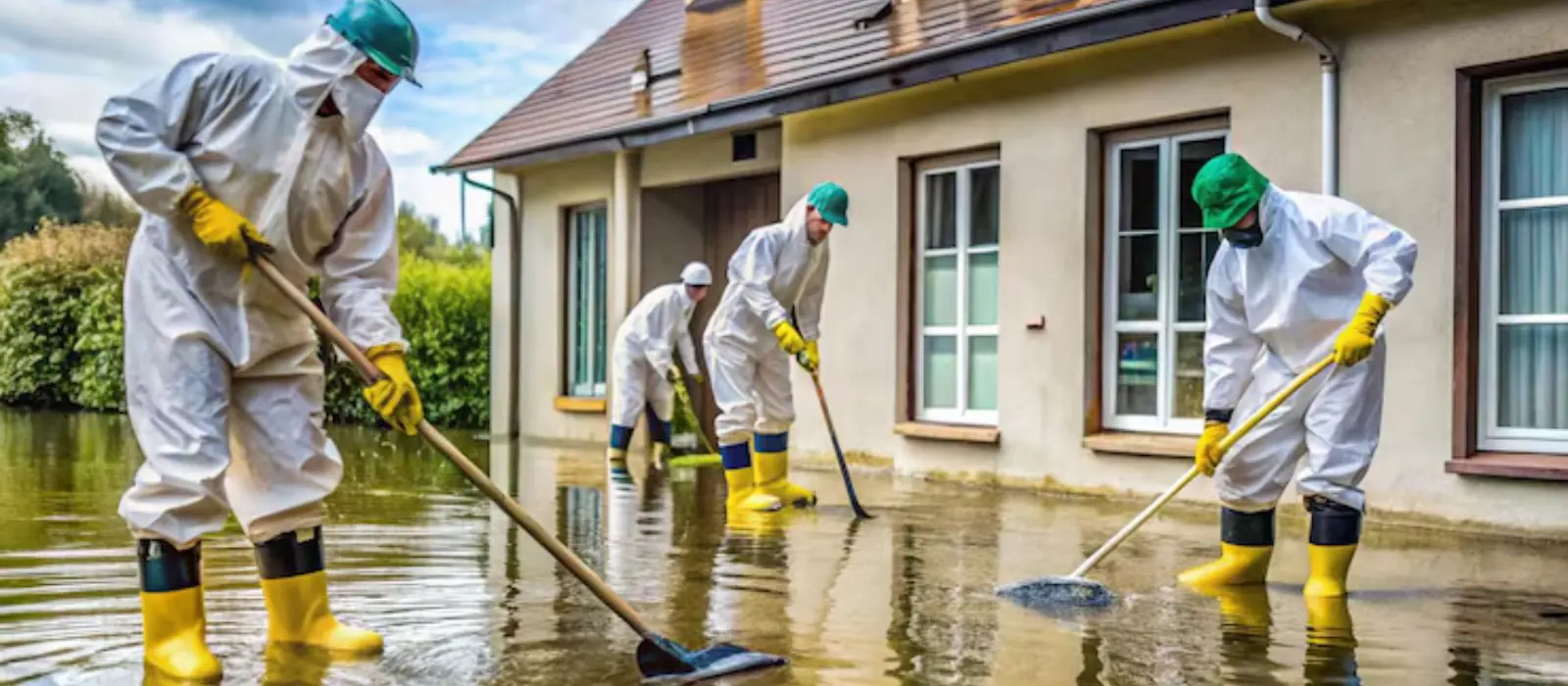
Flooding and sewage backup: what to do first
Flood water in a South Gate property is an emergency, and it is a safety issue before it becomes a repair issue. Our line is open 24/7. While you wait for a crew, stay out of water that is dark, foul or touching electrical equipment, shut off the main water valve if a broken line is feeding the flood, and move valuables above the waterline.
Flood damage restoration is the removal of flood water, the tear-out of materials that cannot be saved, and the drying, sanitizing and rebuilding that follow. It differs from a clean supply-line leak because the water often carries contamination, and that changes what can be kept.
| Water source | Category | Typical handling |
|---|---|---|
| Broken supply line | Category 1 | Extract the water, dry the structure, remove wet porous materials as needed |
| Rain through a roof or window | Category 1 to 2 | Extract and dry, then test materials that stayed wet for a day or more |
| Washing machine or dishwasher overflow | Category 2 | Extract, remove pad and insulation, sanitize affected surfaces |
| Storm runoff or groundwater entering the home | Category 3 | Contain the area, remove porous materials, disinfect and dry |
| Sewer backup through a drain or toilet | Category 3 | Contain, use protective equipment, remove porous materials, disinfect |
The categories come from the ANSI/IICRC S500 standard for professional water damage restoration. You can ask any company whether its crews work to that standard.
Sewage came up through a drain or toilet. What now?
Raw sewage in the house is a Category 3 loss, and the answer is sewage backup cleanup, not a mop and bucket. Keep everyone out of the room, including pets, and do not run more water down any drain, because that can push more waste up. Call the 24/7 line and report that the water is contaminated.
Crews contain the area, wear protective equipment and remove carpet, pad, insulation and any drywall the sewage touched, because porous materials cannot be reliably cleaned. Hard surfaces are cleaned and disinfected, and the space is dried before rebuilding. If the backup came from the main sewer line outside, a plumber or the city sewer authority may need to clear the blockage before cleanup can last.
Below-grade rooms, garages and crawl spaces
Whether your property has a full basement, a below-grade garage or a crawl space, water collects at the lowest point. Pumping comes first, because standing water keeps soaking into framing, stored items and wiring. Then moisture meters find the wet materials, and drying equipment runs until readings come back to normal.
Crawl spaces need extra care. Insulation hangs wet under the floor, the joists stay damp for days and the air stays humid, which is a setup for mold. Crews pump, remove wet insulation, dry the framing and the subfloor from below and check the readings before closing it up. For the pumping stage alone, see our emergency water removal page.
Whole-house flooding, where water reaches several rooms, follows the same order on a larger scale. The crew works from the driest area toward the wettest, protects what can be saved and sets a drying plan for each room.
The Los Angeles River, flood maps and flood insurance
What South Gate property owners should check
The Los Angeles River runs through the eastern part of South Gate, so flood exposure is a fair question for some addresses. Look up your street on the FEMA Flood Map Service Center, then ask your insurer what your policy actually covers.
The California Department of Insurance says homeowners and commercial policies typically exclude flood, mudslide and debris flow. Flood coverage usually comes from the National Flood Insurance Program, and a new policy generally takes effect 30 days after purchase, unless a federally regulated lender requires it for a purchase. Waiting until the forecast turns bad is too late.
If you already have flood coverage, the NFIP claims line is 1-800-638-6620. For a dispute with a different insurer, the department's consumer hotline is 1-800-927-4357.
Not every wet-floor loss is a flood in the insurance sense. A burst pipe or an appliance failure is usually treated differently from storm water entering from outside. Keep dated photos either way, and let your insurer decide which coverage applies.
How flood restoration is scoped and priced
- Water category, with Category 3 adding containment, protective equipment and disposal
- Depth of the water and the number of rooms affected
- Materials that must be removed, such as carpet, pad, insulation and low drywall
- Drying time, equipment and daily monitoring
- Rebuild scope once the structure is dry
A crew explains scope and price before work starts, and you can ask for it in writing. To discuss your own flood, call (213) 776-0579.
Water still rising or sewage in the house?
Stay out and call. The line is answered all night.
Flood response in the towns around South Gate
Downey sits between the Rio Hondo and the San Gabriel River, so owners there should check the same FEMA map you would use in South Gate. Compton has its own drainage and low-lying streets, which the Compton page covers. After the water is out, the next stages are described on the water mitigation page.
Flood damage questions
Yes. Flood calls are taken 24 hours a day, on weekends and holidays. Tell the dispatcher whether the water is clean, dark or sewage, how deep it is and whether it is near electrical equipment. A crew is sent as soon as one is available, and same-day response is offered when crews can be spared.
Not if the water is dark, foul or near outlets, panels or appliances. Water can hide electrical hazards and contamination. Stay out and call, then move items once a crew has made the area safe.
Homeowners policies typically exclude flood. A burst pipe or appliance failure may be covered as sudden and accidental damage. Check your policy and ask your insurer which applies to your loss.
Carpet that was soaked by clean water and lifted quickly can sometimes be dried. Carpet and pad exposed to storm runoff or sewage are generally discarded, because they cannot be reliably cleaned.
Pumping and tear-out are often done in the first day or two. Drying takes several days and depends on materials, and rebuilding is a separate phase after the structure reads dry.
We clean up the damage. A plumber clears the blockage or repairs the line, and the city sewer authority handles problems in the public main. We will tell you if the cause still needs fixing.