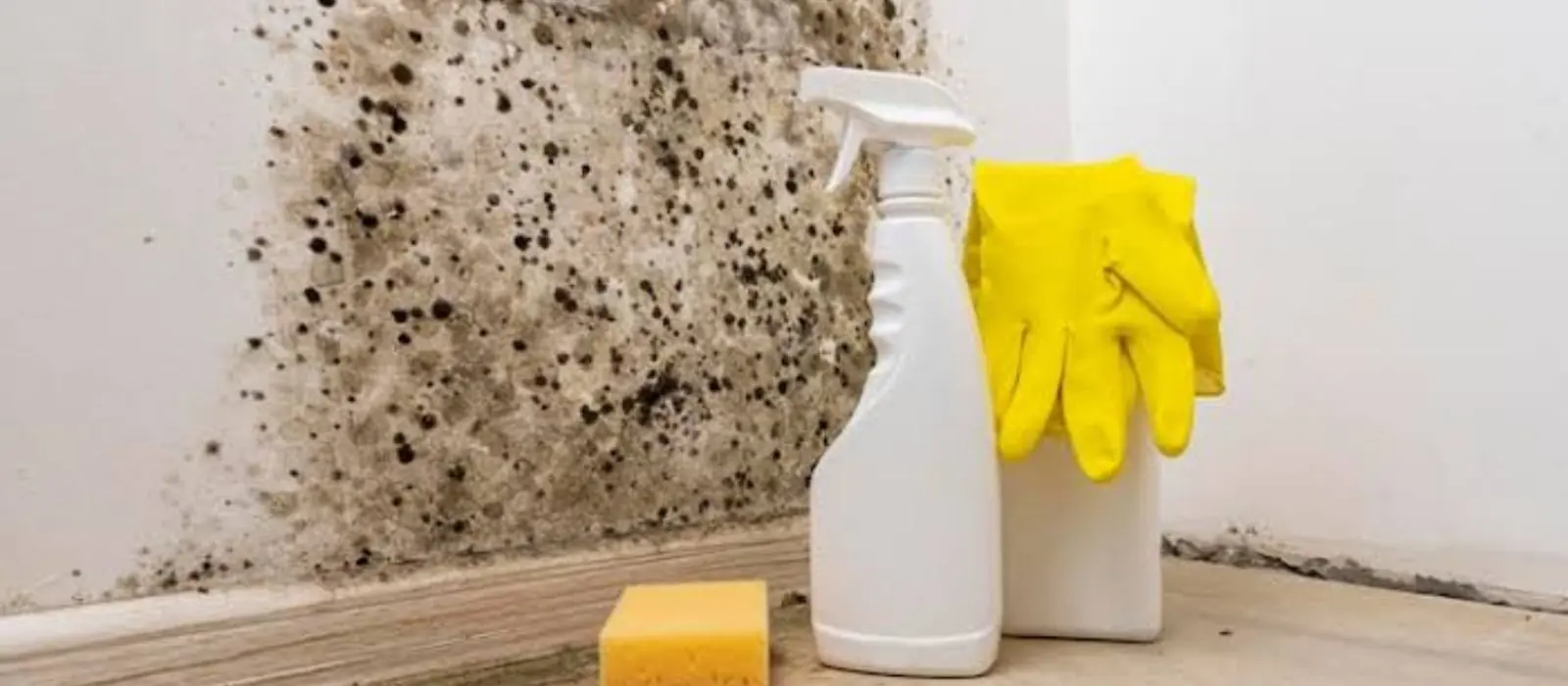
No product kills black mold instantly and permanently. Some cleaners will kill or lift growth on a hard surface within minutes, but the mold will return if moisture remains, and porous materials like drywall hold growth below what you can see. Real removal means taking away the moisture, then the affected material.
Also, black does not mean dangerous and green does not mean harmless. Color cannot identify a species. If you are worried about health, ask a physician, and treat the cause of the mold rather than the color.
Seven instant-fix myths, sorted
| Myth | What actually happens |
|---|---|
| A spray kills it all in one go | It may treat the surface, but dead mold can still be present and roots in porous material stay |
| Bleach is the answer for everything | It does little on porous surfaces and does nothing about moisture |
| Painting with mold-blocking paint solves it | The growth stays under the paint and the moisture still feeds it |
| Mixing two cleaners makes it stronger | Mixing products can release dangerous fumes. Never do it |
| A fan will dry it out | A fan helps, but without dehumidification the air stays humid |
| If I cannot see it, it is gone | Hidden growth behind walls and under flooring often continues |
| A test kit tells me what to do | A sample shows only that spores were present, not the extent or the plan |
Each myth shares the same flaw: it treats mold as the problem when the problem is water. Cleaning without drying is repeat work.
Why nothing is instant
Mold grows in damp materials by sending thread-like growth into whatever it sits on. On glass, tile or sealed surfaces the growth stays on top and wipes off. On drywall, grout, ceiling tile or raw wood, it can go deeper, and no spray reaches all of it.
Even after you remove the growth, spores are normal in indoor air. What matters is whether the materials stay wet. The EPA advises drying or discarding wet materials within 24 to 48 hours to limit mold growth, which is why timing matters more than the product.
What actually works, in order
- Find and fix the water. A leaking supply line, a failed p-trap, a roof gap or poor bathroom ventilation.
- Dry the area with air movers and an LGR dehumidifier until a moisture meter reads normal.
- Remove porous materials that grew mold, such as drywall, pad and ceiling tile, and bag them before carrying them through the home.
- Clean hard, solid surfaces with detergent and water, then wipe them dry.
- Check again in a few days for damp, musty smells or new staining.
For a leak that just happened, emergency water removal and drying within the first day or two is the most effective thing you can do. Waiting for mold to show up means you are already behind.
Mold again after you cleaned it?
Call (213) 776-0579. We look for the moisture source and give you a written scope.
A quick safety guide for small spots
If you clean a small area yourself
- Wear an N95 respirator, gloves and goggles without vent holes
- Keep the area closed off from the rest of the home
- Use only one cleaning product at a time and never mix products
- Do not dry brush or sand growth without containment
- Bag the cloths and sponges you used and take them out right away
- Stop if the growth is larger than a small patch or the material is soft
People with allergies, asthma or weakened immune systems should not do this work and should ask their physician about exposure. This site cannot make health claims about any mold.
When to call a professional
- The growth keeps coming back after cleaning, which means moisture is still reaching it
- It covers a large area or appears in more than one room
- It is on drywall, a ceiling, insulation or flooring
- A musty smell remains but you cannot see the source
- The cause was sewage or a flood
- You rent and cannot access the wall cavity or the plumbing
A mold remediation company works to ANSI/IICRC S520, the published standard for professional mold remediation. Ask which licenses it holds and look them up on the California Contractors State License Board website. Do not hire anyone who promises to make mold disappear forever. A credible company explains the moisture source, the containment plan, what will be removed, and how it will check the result before rebuilding.
Shared walls, rentals and mold in South Gate
Tweedy Mile, the downtown business district along Tweedy Boulevard, has older storefronts that share walls. Water and the damp it leaves behind can travel between neighboring units, so a mold smell in your suite may start next door. Tell the landlord and adjoining tenants promptly, and put your notice in writing.
The same applies to apartments and duplexes elsewhere in the city. If you rent, your landlord generally controls the plumbing and the walls, so send photos with dates. Do not cut into a shared wall yourself.
The first hour after you spot it
Look for the water
Check under sinks, around the tub, on the ceiling above and near the water heater. Mold is a clue that water has been present.
Stop what you can
Close the shutoff valve for a leaking fixture. If water is near electrical outlets, stay away and cut power only if the panel is dry and safe.
Photograph it
Take dated photos before you clean anything. They help your landlord, plumber and insurer see what changed.
Keep air moving, gently
Open a window and run a dehumidifier if you own one. Do not blow a fan directly at a large moldy surface.
Decide small or large
A patch on tile is a wipe-down. Growth on drywall, a ceiling or in several rooms needs a professional look.
Insurance usually responds to sudden and accidental water damage, and often does not respond to gradual leaks or neglect. If the mold followed a recent burst pipe or appliance failure, tell your insurer early and check your policy for any mold limits.
What a fast response looks like
| Situation | Best move |
|---|---|
| Leak just happened, no mold yet | Stop the water and dry the materials right away |
| Small spot on tile or sealed surface | Clean with detergent, dry fully, watch for return |
| Spot on drywall or ceiling | Find the leak and get an assessment before cutting or scrubbing |
| Musty smell, no visible growth | Look for hidden moisture with a meter and thermal camera |
| Sewage or flood water involved | Stay out and call a professional |
A fresh leak is a job for water mitigation, because drying is the step that decides whether mold ever starts. A crew reads moisture in the drywall and framing, sets equipment, and returns to confirm the readings. If growth already shows, the plan adds removal.
Neighbors in Downey and Lynwood face the same moisture-first rule, and our crews cover those cities as well as South Gate.
Questions South Gate homeowners ask about killing black mold
Vinegar can affect some surface growth, but it does not fix moisture or reach through porous materials. Do not combine it with bleach or any other cleaner.
Color cannot tell you the species, and health effects are a question for a physician. Treat all indoor growth the same way: fix moisture, remove, and dry.
It may treat the surface but cannot reliably reach what is inside drywall. If drywall has growth, it normally gets cut out and replaced.
Growth can begin within about 24 to 48 hours in wet materials, according to EPA guidance. Quick drying is the best prevention.
No. Paint hides the growth and traps moisture. The stain often bleeds through and the underlying problem continues.
Check your water bill to see whether the City or Golden State Water Company serves you. The City's water operations contact is (323) 563-5796 and Golden State Water answers 24 hours at 1-800-999-4033. Then call a drying or remediation company for the damage.