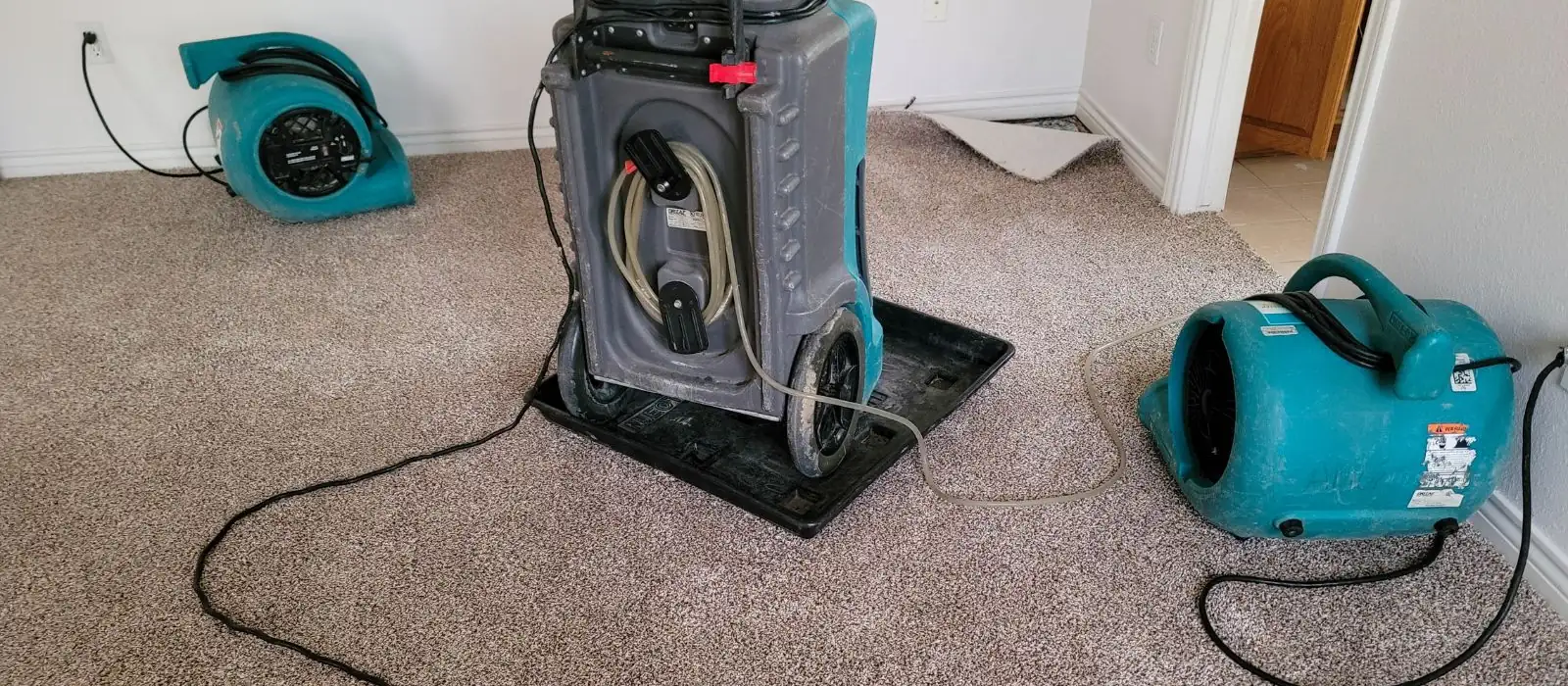
Water mitigation means limiting the damage a water loss can do. It covers stopping the source, extracting standing water, removing materials that cannot be saved, and drying everything else with air movers and dehumidifiers until moisture meters show normal readings. It is the first phase of the job, and it usually decides how big the second phase gets.
Mitigation, restoration and repair compared
| Phase | Main goal | Typical work | Who is involved |
|---|---|---|---|
| Mitigation | Stop further damage | Source control, water extraction, tear-out of wet materials, drying, monitoring | Mitigation crew, plumber if a pipe failed |
| Restoration | Return the property to its prior condition | Cleaning, sanitizing, deodorizing, content handling, final checks | Restoration crew |
| Repair and rebuild | Replace what was removed | Drywall, insulation, flooring, baseboard, paint | Contractor, with permits where needed |
Companies often use these words loosely, so ask for the scope in writing. A quote that says only "water damage services" does not tell you which phase you are buying.
Hours 0 to 24: stop, assess and remove
The first day is about control. The crew finds where the water came from, confirms it is shut off, and checks for electrical and slip hazards. Then they sort out how far the water traveled, using moisture meters and a thermal imaging camera to see wet areas behind walls and under floors that look dry.
Standing water comes out next with extraction units. Every hour water sits, it wicks further into drywall, baseboard and subfloor, so extraction is the step that saves the most material. If you have an active leak or a flooded room, emergency water removal is the part of mitigation that cannot wait.
Hours 24 to 72: tear-out and structured drying
Once the bulk water is gone, the crew decides what to remove. Soaked insulation, wet carpet pad and drywall that has lost strength usually go, because they dry slowly and can hold moisture against framing. Cutting wall base a few inches up or drilling small holes lets air reach the cavity.
Then drying equipment goes in. Air movers push dry air across surfaces, and LGR dehumidifiers pull moisture out of the air so it does not settle somewhere else. The crew returns to take readings, usually daily, and moves equipment as wet areas shrink. Drying is finished when readings match an unaffected reference, not when the room feels dry.
A good crew also documents the work. Expect photos of the damage before tear-out, a sketch of the affected rooms, the starting moisture readings and a log of equipment placed and removed. That paper trail helps you compare quotes and gives your insurer a clear record if you file a claim.
What the equipment does
Core mitigation equipment and its job
- Extraction units: pull standing water from floors and carpet
- Moisture meters: measure moisture inside wood, drywall and concrete
- Thermal imaging camera: shows temperature patterns that point to hidden wet areas
- Air movers: speed evaporation from surfaces and open cavities
- LGR dehumidifiers: remove the moisture that evaporation puts into the air
- Drying log: daily readings that show the job is actually progressing
Water damage in progress?
Call (213) 776-0579. Describe the source and the rooms affected, and we will explain the first steps.
Why water category changes the plan
Professional standards, such as ANSI/IICRC S500, sort water into categories by how contaminated it is. Clean supply water from a broken line is treated differently from gray water from a washer, and both differ from sewage or floodwater, which are contaminated from the start.
The category affects what can be kept. Porous materials soaked with contaminated water, like carpet pad and drywall, are usually removed rather than dried. Clean water gives a better chance of saving them. Any company you hire should be willing to say whether its crews work to S500 and explain how it classified your loss.
Time matters too. Clean water left alone can degrade in condition, and the EPA advises drying or discarding wet materials within 24 to 48 hours to limit mold growth. That is the real reason mitigation starts before the insurance conversation is finished.
An open window is not a substitute for equipment. When the outside air is humid, it carries moisture in, and a single household fan cannot lower humidity in a closed, wet room. Controlled drying keeps the air dry and moving at the same time.
What you can do before the crew arrives
Stop the source
Shut the main or fixture valve. If you cannot, call your water provider's emergency line.
Protect the electrical
Cut power only if the panel is dry and safe to reach. Otherwise call the utility or 911 and stay out.
Photograph everything
Take wide and close photos of the water, the source and damaged items before anything moves.
Lift what you safely can
Move small furniture, rugs and electronics out of the wet area. Do not lift heavy items alone.
Leave ruined materials in place
Do not rip out drywall or flooring before the crew sees it, because they need to document it.
For cleaning, sanitizing and odor control once the drying is complete, see our water damage cleanup service. If walls, floors or ceilings were opened, rebuilding falls under water damage repair.
Mitigation questions that come up in South Gate
Water mitigation in South Gate homes and shops
Tap water in South Gate comes from local deep groundwater wells, and the City's 2021 Consumer Confidence Report lists total hardness of 226.3 mg/L. Hard water leaves mineral scale that can stiffen old shutoff valves, so turn yours now. A valve that will not close is the difference between a small mitigation job and a large one.
Some South Gate addresses are served by the City and others by Golden State Water Company, which answers customer service 24 hours a day at 1-800-999-4033. Look at your bill, write down your provider's number, and keep it where everyone in the house can find it.
Along Tweedy Boulevard, older storefronts share walls, so water can travel between units. If you rent a shop, notify neighboring tenants and your landlord right away, because their space may need drying as well.
Questions South Gate homeowners ask about water mitigation
No. Mitigation is the emergency phase that stops the damage and dries the structure. Restoration and rebuilding return the property to its prior condition afterward. One company may do all of it, but the scopes and costs are different.
Drying commonly takes several days, and the number depends on the water category, the materials and how far the water spread. Daily moisture readings, not a calendar, tell the crew when to stop.
A cup of water on a tile floor does not. Water that soaked carpet pad, ran under baseboard or went into a wall cavity does, because it keeps wicking after the surface looks dry.
No honest number exists before someone inspects the property. Price follows the water category, the area affected, the materials involved, how many days of equipment are needed and whether rebuilding is part of the job.
Sudden and accidental water damage, such as a burst pipe, is often covered, while gradual leaks and neglect often are not. Flood is usually excluded from homeowners policies. Check your policy and ask your insurer before work starts.
Renters are the majority in both towns, at 73.4 percent of occupied homes in Huntington Park and 57.1 percent in Paramount. In most rentals the landlord controls repairs to the building, so notify the landlord in writing the moment water appears.
Do not wait on a reply to protect your belongings. Photograph the damage, move your items to dry ground, and call the landlord again if there is no answer.