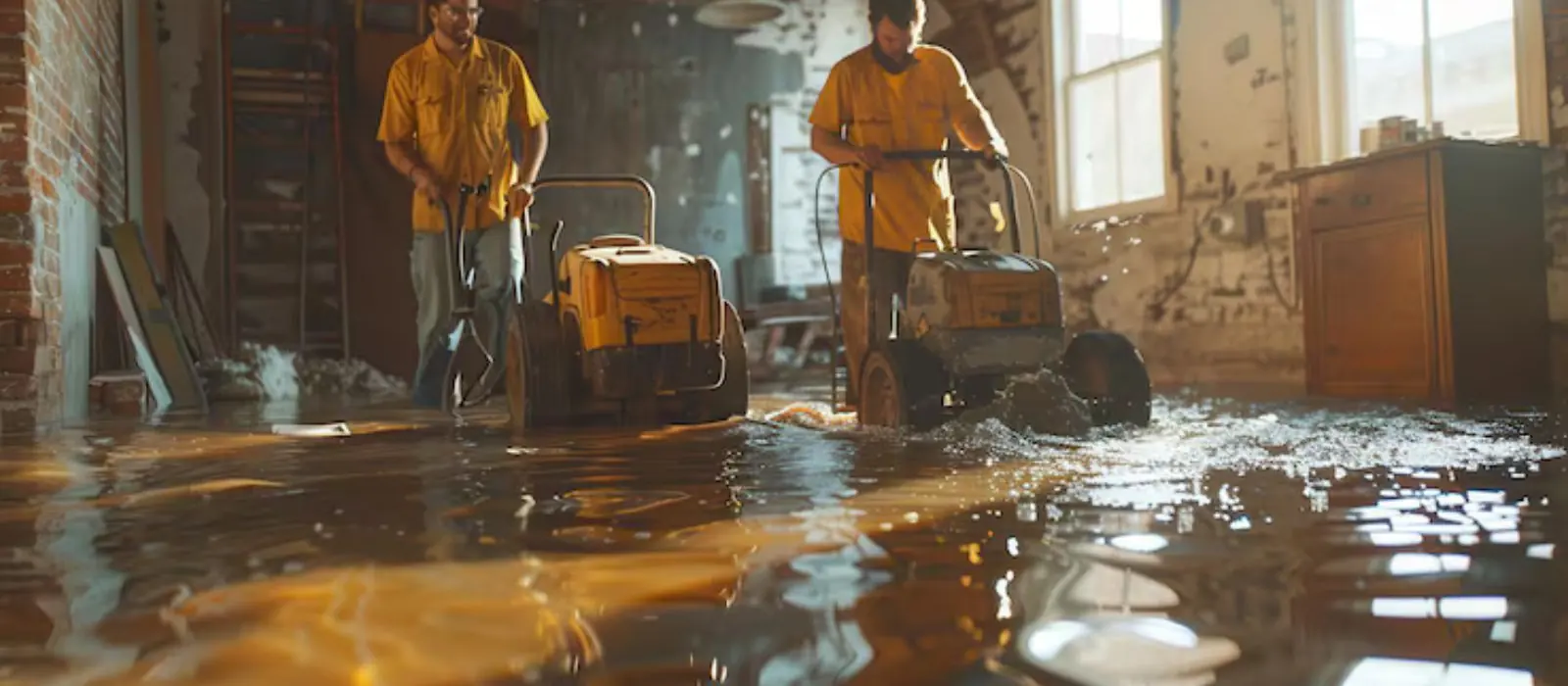
Water restoration means returning a property to the condition it was in before the water arrived. That covers stopping the damage, removing water, drying the structure, cleaning and sanitizing, and rebuilding what could not be saved. The word is used loosely, so some companies mean only the drying part, while others mean everything through paint. Ask which one is in the quote.
The stages from first call to final paint
| Stage | What happens | Who usually does it |
|---|---|---|
| 1. Emergency response | Stop the source, remove standing water, protect contents | Mitigation crew, plumber for the source |
| 2. Inspection and mapping | Moisture meter and thermal imaging readings, water category noted | Mitigation crew |
| 3. Extraction and drying | Extraction units, air movers, LGR dehumidifiers | Mitigation crew |
| 4. Cleaning | Cleaning, sanitizing and odor control of surfaces and contents | Mitigation or cleanup crew |
| 5. Demolition | Removal of wet drywall, baseboard, flooring or insulation | Mitigation or reconstruction crew |
| 6. Rebuild | Drywall, flooring, paint, trim, cabinetry | Reconstruction contractor |
Mitigation versus restoration
Mitigation is the emergency half. Its job is to limit how much damage the water causes, which means extraction, drying and removing materials that cannot be saved. Our water mitigation page covers that stage in more detail.
Restoration is the broader word. It includes mitigation but continues through the repair and rebuild of the structure and finishes. A homeowner may hire one company for both, or hire a mitigation crew first and a separate contractor for the rebuild. Either path works if the handoff is clear.
Who does what on a typical job
Plumber or roofer
Fixes the source: the supply line, drain, water heater, roof or condensate line. Water restoration cannot finish until this is done.
Mitigation crew
Removes water, sets drying equipment, logs readings and removes materials that cannot be dried.
Cleanup technicians
Clean and sanitize surfaces and contents, and treat odor where needed.
Reconstruction contractor
Rebuilds drywall, flooring, trim and paint. This work may need permits.
You and your insurer
You document the loss and make decisions. Your insurer decides coverage under your policy.
Water categories change the plan
Not all water is the same, and the category affects what gets thrown away. Clean water from a broken supply line is handled differently from gray water from a washing machine, and both differ from sewage or river water. The category can also worsen as time passes.
- Category 1: water from a clean source such as a supply line, which can degrade if left
- Category 2: gray water with some contamination, such as a dishwasher or washing machine overflow
- Category 3: grossly contaminated water such as sewage or flood water, which needs protective equipment and removal of porous materials
Stay out of unsafe water
Water that has reached outlets, appliances or a panel can carry current. Sewage and flood water carry contamination. Keep children and pets out, do not enter the area, cut power only if the panel is dry and you can reach it safely, and call 911 or the utility for gas or electrical risk before calling us.
Need to know where to start?
Call (213) 776-0579. We will ask a few questions and explain the first steps.
Terms that get mixed up
| Term | What it means | Often confused with |
|---|---|---|
| Mitigation | Emergency steps to limit damage and start drying | Restoration, which is the whole process |
| Extraction | Removing standing water with pumps and extraction units | Drying, which removes moisture from materials |
| Drying | Air movers and dehumidifiers lowering moisture in materials | Cleaning, which treats surfaces |
| Demolition | Controlled removal of wet materials that cannot be saved | Destruction, since removal is based on readings |
| Reconstruction | Rebuilding what was removed | Repair, which can mean any fix |
After water is out and drying is under way, surfaces and belongings are cleaned. Nonporous items can often be cleaned and kept. Porous items, such as carpet padding, wet insulation and soft furnishings, may be discarded depending on the water category and how long they were wet. See our water damage cleanup service for the details.
What you can do before the crew starts
Stop the source if you can do so safely. Take photos and video of the damage, the source and affected belongings before anything is moved. Move valuables and papers to a dry room and keep notes of the time you found the water.
If the loss came from rising outdoor water instead of a plumbing failure, the work is closer to flood damage restoration, and your coverage question changes. Keep the receipts for anything you buy to protect the property, since your insurer may ask for them.
How long each stage runs
Emergency response is measured in hours. Drying typically takes several days, depending on materials and conditions, and the equipment stays until readings match a dry reference. Rebuild timing depends on the scope, material availability and permits.
Do not read a quick drying phase as a short project. Rebuild is often the longest stage, particularly when cabinets, flooring or specialty finishes are involved. A written scope with stages makes the schedule easier to follow.
What a good restoration estimate lists
- Source of water and category
- Moisture readings and affected areas
- Equipment type and expected days
- Materials to be removed and disposed of
- Cleaning and sanitizing items
- Rebuild scope, or a note that rebuild is separate
- Permits and who pulls them
- Payment terms and change-order process
Why shared walls and the river matter in South Gate
Tweedy Mile is the downtown business district along Tweedy Boulevard, and the city is revitalizing it under a 2019 Tweedy Boulevard Specific Plan. Older storefronts and shared walls let water travel between units, so if you rent or own a commercial space there, tell neighboring tenants and the landlord quickly.
The Los Angeles River runs through the eastern part of South Gate. Flood water is a separate matter from a burst pipe: California Department of Insurance says homeowners policies typically exclude flood, so check the FEMA Flood Map Service Center for your address and ask your insurer about flood coverage before you need it.
Rebuild and permits
South Gate Building and Safety, at 8650 California Avenue, (323) 563-9549, says permits are typically required for repair, alteration and construction, and for plumbing, mechanical and electrical improvements. If your restoration includes rebuilding walls or replacing wiring, ask who pulls the permit before the work starts. The same holds in Paramount and Compton, though each city has its own office.
Questions South Gate homeowners ask about restoration
They overlap. Restoration usually covers drying and cleanup plus rebuild, while water damage repair focuses on the rebuild side. Many companies handle both.
No. If materials are clean, dried quickly and test dry, they may stay. Demolition is based on readings, water category and how long the material was wet.
Sudden and accidental damage is often covered. Gradual leaks and neglect often are not, and flood is usually excluded. Check your policy, call your insurer and document everything.
ANSI/IICRC S500 is the published industry standard for professional water damage restoration. You can ask any company whether its crews work to it.
Shut off the water at the fixture or main. Your water provider may be the City of South Gate or Golden State Water Company, so check your bill. Golden State Water customer service answers 24 hours a day at 1-800-999-4033.
Not always. Some companies offer both. If you use two, ask for a clear handoff of readings, photos and scope so the second company can see what was removed.