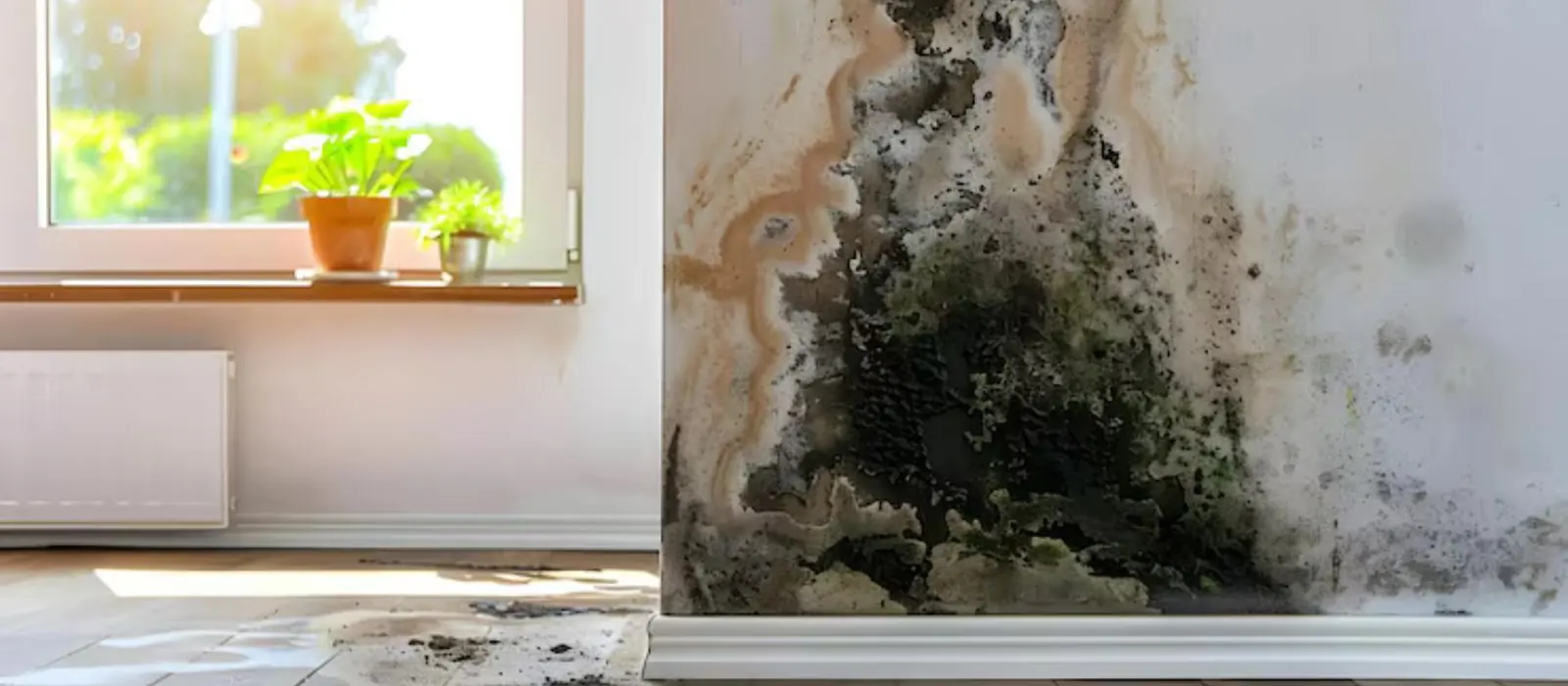
Mold does not appear from nothing. It needs moisture, and wet drywall, carpet, wood and insulation provide it. EPA guidance says to dry or discard wet materials within 24 to 48 hours to limit mold growth. So the practical answer is simple: find the water, stop it, and start drying inside that window.
From wet to moldy: what the clock looks like
| Time since water | What is usually happening | What to do |
|---|---|---|
| 0 to 24 hours | Materials absorb water, humidity climbs in the room | Stop the source, remove standing water, start air movement |
| 24 to 48 hours | The EPA window for drying or discarding wet materials | Get professional drying started, remove soaked porous items |
| Days 3 to 7 | Wet cavities and hidden layers may still hold moisture | Verify drying with a meter, check behind baseboards and under flooring |
| Week 2 and later | Visible growth or a musty odor may appear on materials that stayed wet | Stop the moisture, then plan remediation if growth is present |
Treat the table as a general guide, not a promise. Temperature, humidity, the material and the water type all change how quickly things develop. A small spill on a tile floor is different from a leak inside a wall, which can stay wet for weeks without anyone noticing. A slow drip under a sink or a clogged condensate line often does more harm than a dramatic burst, because it goes unseen.
Why moisture is the real problem
Cleaning mold without fixing moisture does not solve anything. The growth returns because the conditions that supported it are still there. Remediation starts with the water source, whether that is a leaking supply line, a clogged condensate line, a roof leak or a damp crawl space.
Mold also hides, which is why a room can look clean and still be a problem. Drywall paper, the back of baseboards, insulation and subfloor edges stay damp without showing it. A moisture meter and a thermal imaging camera help locate those spots before they become visible stains.
What to do in the first two days
Actions that reduce mold risk
- Shut off the water source and fix or isolate the leak
- Remove standing water with a wet vacuum or pump
- Lift soaked rugs, pads and cardboard and move them out to dry or discard
- Open windows or run fans if outdoor air is dry, and use a dehumidifier
- Photograph the damage before moving anything
- Pull baseboards where water went behind them
- Call a mitigation company if more than a small area is wet
Professional water mitigation uses air movers and LGR dehumidifiers with moisture readings to confirm materials are dry. Drying aims to bring them back to a dry reference, not just feel dry. Readings are repeated across several days, and equipment stays until the numbers match a reference taken from a dry part of the same material. If a reading stalls, the crew looks for a missed pocket of water, such as wet insulation or a damp subfloor edge.
Water got into walls or flooring?
Call (213) 776-0579. We will tell you what to do first and explain how drying is verified.
If you already see or smell mold
Stop, and keep the area closed. Do not dry-brush, sand or blow air across it, since that spreads spores through the home. Do not mix cleaning products, because some combinations release dangerous fumes.
Color does not tell you what species you have. Black, green, white and brown growth can all look alike to the eye, and only a lab can identify a species. Any question about how mold affects a person's health belongs with a physician.
Small area or large area
A small patch of surface growth on a nonporous material can often be cleaned by a homeowner using the EPA guidance and basic protective gear. Large areas, hidden growth, growth on porous materials or any growth after sewage or flood water should be handled by a mold company. If the moisture source is still active, call before you scrub.
What mold remediation involves
Professional remediation follows a published standard: ANSI/IICRC S520 for professional mold remediation. A typical job isolates the area with containment, uses air filtration, removes affected porous materials, cleans salvageable surfaces and then verifies the result. Our mold remediation page lays out these steps.
Ask any company whether its crews work to S520. Ask what licenses it holds and look the license up on the California Contractors State License Board website. A written scope should list the area, the containment, the materials removed and how the work will be checked afterward.
Myths and facts about wet buildings and mold
| Myth | Fact |
|---|---|
| Bleach solves the problem | Surface treatments do not fix the moisture that supported growth |
| If I cannot see it, it is not there | Moisture and growth can sit inside walls and under floors |
| Black mold is a special kind | Color does not identify a species, and only testing can |
| A fan is enough | Moving air without removing moisture can leave materials wet |
| Once removed, it never returns | Growth can return if moisture returns, so the source must stay fixed |
Older South Gate homes and flood questions
Many South Gate homes date from the 1910 to 1940 building period, when farmland turned into homes and factories, and many early homes were owner-built. Older plaster, lath, paint and materials can hide moisture and may need testing before demolition, so tell the crew the home's age and ask whether materials should be tested.
The Los Angeles River runs through the eastern part of the city. Mold after river-type flooding is a coverage question first. California Department of Insurance says homeowners policies typically exclude flood, and NFIP flood policies generally take effect 30 days after purchase. Check the FEMA Flood Map Service Center for your address and ask your insurer now, not after a loss.
Insurance and documentation
Sudden and accidental water damage is often covered, while gradual leaks and neglect often are not. Mold coverage varies by policy, so read yours or ask your insurer directly. The California Department of Insurance consumer hotline is 1-800-927-4357.
Keep photos, moisture readings, receipts and a written timeline. A water damage cleanup record that shows when drying began helps show you acted quickly. If you are in Downey or Lynwood, the same documentation applies.
Questions South Gate homeowners ask about water damage and mold
Growth can begin within a day or two on materials that stay wet, though the pace varies. That is why EPA guidance sets a 24 to 48 hour window for drying or discarding wet materials.
Not always. If you can see or smell growth, the priority is finding and fixing the moisture. A mold company can explain whether testing helps your situation.
Sometimes, if the water was clean and it dries quickly. Drywall that stays soft, stained or contaminated is usually removed.
It depends on the policy and cause. Sudden and accidental damage is often covered, while gradual leaks often are not. Ask your insurer.
Some addresses are served by the City and some by Golden State Water Company, which answers 24 hours a day at 1-800-999-4033. If a main-line leak is soaking your yard or crawl space, call your provider to shut it off, then call us.
Call when more than a small area is wet, when water got into walls, when it sat over 24 hours or when you see growth bigger than a small patch. A mitigation crew can map the moisture and tell you what to dry or remove.