If a pipe bursts or a neighbor's unit leaks into yours, a renters policy usually pays for sudden and accidental damage to your belongings. It often adds money for a hotel or extra living costs if you cannot stay home. It does not usually pay to repair the building itself, because the landlord insures that. Flood, slow leaks and neglect are commonly excluded.
Policies differ, so treat this page as general background and read your own declarations page. Your insurer decides what is covered, and the California Department of Insurance consumer hotline at 1-800-927-4357 can answer general questions.
Myths and facts about renters coverage
| What people say | What is usually true |
|---|---|
| My landlord's insurance covers my furniture | The landlord's policy typically covers the building. Your belongings need your own policy. |
| Any water damage is covered | Sudden and accidental events are often covered. Gradual leaks and neglect often are not. |
| Renters insurance covers floods | Homeowners and renters policies commonly exclude flood. Flood coverage is a separate policy. |
| If the building is damaged, I owe nothing | If your own carelessness caused it, you may be responsible for part of the cost. |
| I can wait and see if it dries on its own | Policies usually expect you to take reasonable steps to stop further damage. |
That last row is the one that costs tenants money. Soaked carpet, drywall and furniture can grow mold in about a day or two, and waiting can turn a smaller claim into a larger dispute.
What a renters policy usually pays for
- Personal property: furniture, clothing, electronics and appliances you own, damaged by a covered event such as a burst supply line.
- Loss of use: costs for a place to stay and extra food costs while the unit is unlivable. Limits and time caps vary.
- Personal liability: if water from your unit damages a neighbor's unit, this part may help with their claim against you. An overflowing tub is the classic example.
- Deductible: you pay this first. A small loss may fall below it, so know your number before filing.
Sewer backup and water from outside the home often need an added endorsement. Look for those words on your policy or ask your agent whether you have them.
Who fixes what: landlord or tenant
| Item | Usually the landlord | Usually the tenant |
|---|---|---|
| Walls, ceiling, floors, built-in cabinets | Repair and drying of the structure | Notify promptly in writing |
| Plumbing that failed from age or wear | Repair by a plumber | Report the leak right away |
| Your furniture, clothes, electronics | Not responsible in most cases | Your own policy applies |
| Damage from your overflow or misuse | May bill you or your insurer | May be responsible |
| Mold from an unreported leak | Disputed, depends on the facts | Reporting early protects you |
Written notice matters more than a phone call. Send a text or email with the date, photos and a short description, then keep the thread. If it becomes a dispute, a tenant rights organization or an attorney can advise you, because this is a legal question and not one a cleanup company can settle.
Your first 24 hours as a tenant
Stop the source
Close the shutoff valve under the sink or toilet, or the unit's main. If the water is coming from above, tell the neighbor and the landlord.
Stay clear of electricity
If water is near outlets or a panel, do not touch them. Cut power only if the panel is dry and safe to reach, and call the utility or 911 for electrical or gas risk.
Photograph everything
Take wide shots and close-ups before moving anything, including the ceiling stain, floor, and the make and model of damaged items.
Notify in writing
Email or text your landlord and property manager the same day, then follow up by phone.
Call your insurer
Ask about your deductible, loss of use limits, and whether they want an adjuster to see items before you discard them.
Start drying
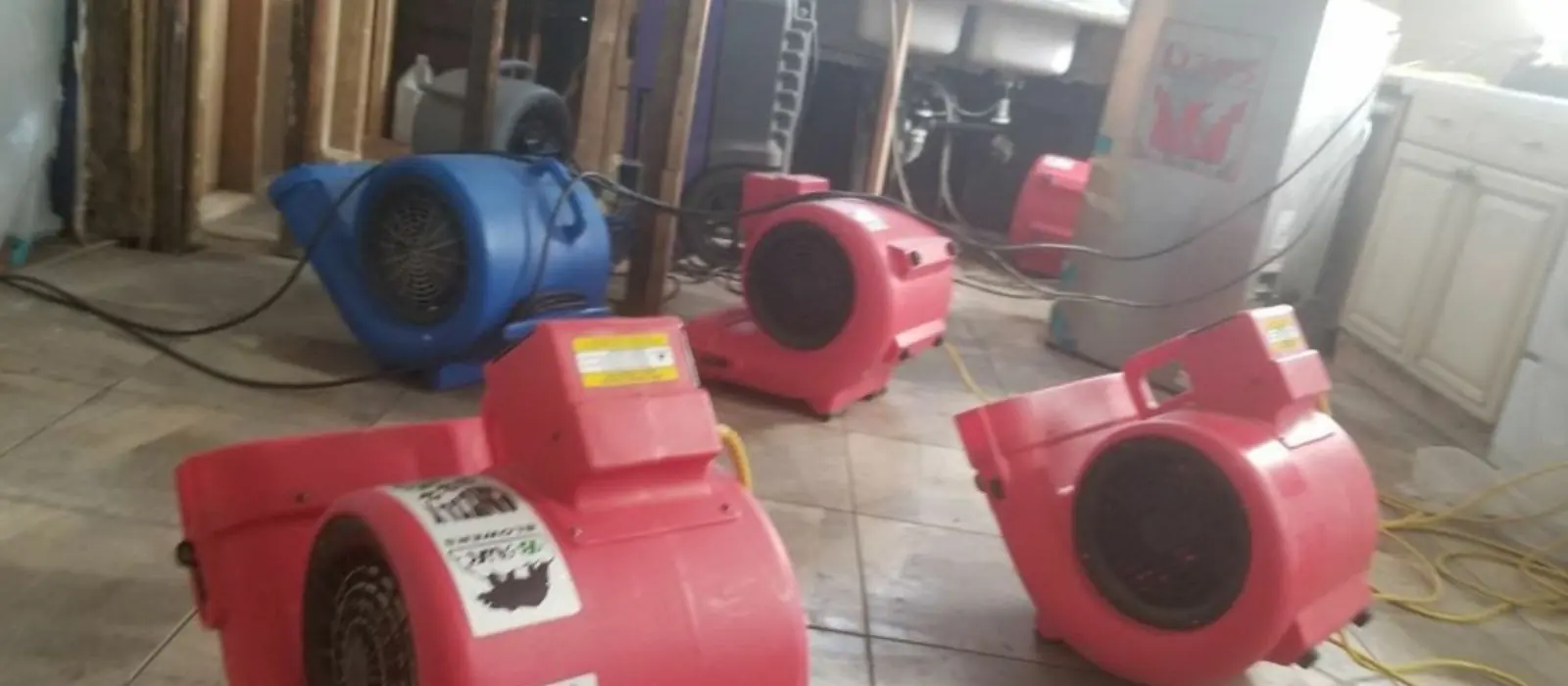
Pulling wet pad, running air movers and setting a dehumidifier cuts the spread. Keep every receipt.
Need the unit dried out?
Call (213) 776-0579. We document moisture readings and give you a written scope for your landlord and insurer.
Documenting your loss for a claim
Keep this file together
- Dated photos and video of damage before cleanup
- A room-by-room list of damaged belongings with age, brand and approximate value
- Receipts or bank records for similar items where you have them
- Your written notice to the landlord and any replies
- The drying company's scope, moisture readings and invoice
- Names, dates and claim numbers from every call with your insurer
If your unit needs water damage cleanup, ask the crew to write down which materials belong to the building and which are your property. That split helps both claims.
What renters in South Gate should keep in mind
Huntington Park, next door, has 73.4% of occupied homes rented, and Paramount has 57.1%. Downey is split roughly evenly between owners and renters. That mix means many tenants share walls, ceilings and plumbing stacks with neighbors, so a leak upstairs may start in a unit you do not control. Tell your landlord quickly and ask who the property manager is.
The Los Angeles River runs through the eastern part of South Gate. Check the FEMA Flood Map Service Center for your address and ask your insurer or agent about flood coverage. NFIP flood policies generally take effect 30 days after purchase, so waiting until a storm is forecast is too late.
Flood, sewer and the gaps people discover late
California insurance guidance says homeowners policies typically exclude flood, mudslide and debris flow. Renters policies often follow the same pattern. Flood coverage comes from the National Flood Insurance Program, and renters can buy it for their belongings even if they do not own the building. The NFIP claims line is 1-800-638-6620.
If the water came from outside, such as street runoff, or from a sewer line, the claim route changes. Large losses may need flood damage restoration crews with different safety steps, and sewage means you should stay out of the area.
When the landlord does not respond
Keep your records, send a second written notice, and ask your insurer whether your policy can help with temporary housing. For active leaks, you can also call for emergency water removal yourself so the damage does not spread while the dispute continues, then share the invoice and readings.
Lynwood and Compton tenants face the same question when the owner is out of town or hard to reach. If your unit is in Lynwood, the steps and records above apply as they do here.
Questions South Gate renters ask about water damage
A sudden burst pipe is a typical covered event for your belongings and loss of use. The pipe repair itself and the building damage usually fall to the landlord's policy. Check your policy for exclusions.
Often not. Many policies exclude damage from leaks that go on for weeks or months because they are seen as maintenance problems. Reporting a drip early protects both the claim and your relationship with the landlord.
The landlord usually handles the building. If you have a lot of your own belongings affected, or the landlord is slow, you may bring in a company yourself. Keep the invoice and readings for your insurer.
Your personal liability coverage may respond if you were responsible, and the landlord's insurer may also be involved. Report it to your insurer quickly rather than arranging payment directly with the neighbor.
Yes. NFIP policies are available to renters for contents. Remember the 30-day wait, unless a federally regulated lender requires coverage on a purchase.
Repairs that touch plumbing, electrical or structure may need permits, and the landlord or contractor usually pulls them. South Gate Building and Safety, at 8650 California Avenue, (323) 563-9549, can tell you what applies. Tenants can ask the landlord who is handling that step.