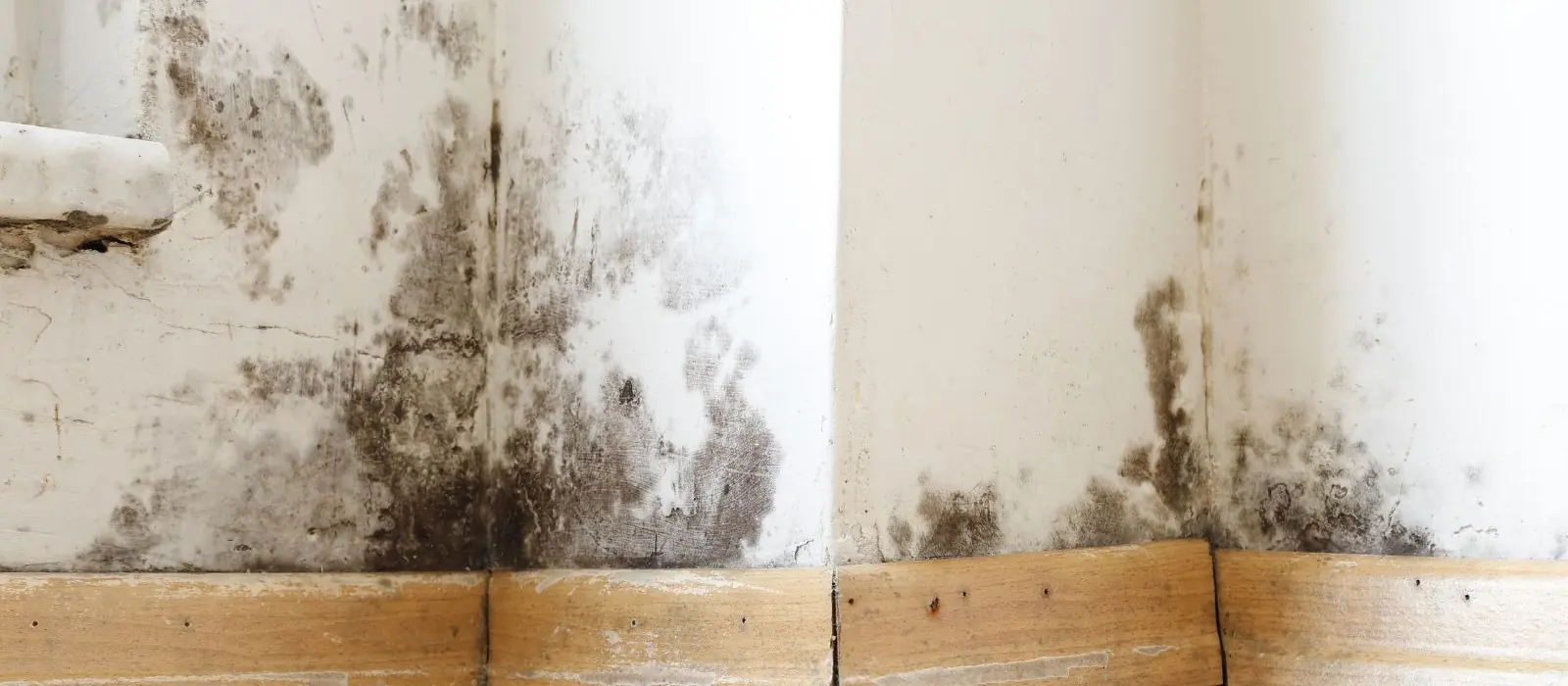
Mold on wood is cleaned off when the wood is solid, sealed and the growth is limited to the surface. It is removed when the wood is soft, crumbling, deeply stained or part of the structure and you cannot tell how far growth goes. In both cases the same rule holds: mold needs moisture, so the wet source must be found and dried before any cleaning matters.
Color does not tell you what species you have. Black, green, white and orange growth all get handled the same way, and health questions belong with a physician.
Which wood can be cleaned and which cannot
| Wood condition | Usual approach | Who should do it |
|---|---|---|
| Sealed or varnished furniture, trim, shelves with light surface growth | Clean with detergent and water, dry fully | Homeowner with PPE |
| Raw lumber stained on the surface, still hard | Brushing or sanding the surface, dry, possibly seal | Homeowner for small areas, professional for large |
| Soft, spongy or crumbling wood | Remove and replace | Contractor, possibly after a structural look |
| Joists, studs, subfloor or roof sheathing with growth | Professional assessment, containment, controlled cleaning or removal | Mold remediation company |
| Wood with large patches of growth or growth in several rooms | Treat as a professional job | Mold remediation company |
If you are unsure which row your wood belongs in, stop and get an opinion before disturbing it. Scrubbing growth that turns out to be spread through framing releases more material into the room than it removes. A quick look by a professional with a moisture meter and a thermal imaging camera costs far less than redoing a spread-out job.
Gear to put on before you touch it
Protective equipment
- N95 respirator or better, fitted to your face
- Goggles without ventilation holes
- Disposable gloves and long sleeves you can wash right away
- Plastic sheeting and tape to seal the work area from the rest of the home
- A box fan in a window blowing outward, so air leaves the room instead of spreading through it
Keep kids, pets and anyone with breathing concerns out of the area. Never mix cleaning products, including bleach with ammonia or acid-based cleaners, because the fumes can be dangerous.
Cleaning surface mold on sealed wood
- Dry the item or area first. Mold sitting on wet wood will keep growing.
- Vacuum loose spores with a HEPA vacuum, not a regular household one that can blow them back out.
- Wipe the surface with detergent and water using a damp cloth, working in one direction. Do not soak the wood.
- Discard the cloth in a sealed bag after each section.
- Dry the wood with air movement or a dehumidifier, and check it again after a day.
- Inspect for staining or soft spots. If the wood is soft, it needs to be replaced.
After cleaning, look at the wood in bright light and press on it with a fingertip. It should feel hard and dry. Check the same spot again in a few days, because a damp patch or a musty smell means moisture is still reaching the wood from somewhere nearby.
A surface sprayed with a disinfectant may look clean but still carry dead mold material, so physical removal comes first. Do not paint or caulk over mold, because the coating hides it and the underlying moisture is still there.
Raw lumber, studs and joists
Unfinished wood is porous, so growth can sit below the surface even when the top looks clean. Light staining on solid framing can sometimes be cleaned by a professional using HEPA vacuuming and controlled abrasion. Soft or splintering wood needs a contractor to decide if the member can stay.
For framing, the call is usually not yours to make. A mold remediation crew working to ANSI/IICRC S520, the published standard for professional mold remediation, sets up containment and negative air so cleaning does not spread the problem. Ask any company whether its crews follow S520 and what licenses it holds, then look the license up on the California Contractors State License Board website.
Not sure how far it goes?
Call (213) 776-0579 for a straight answer on what can be cleaned and what has to come out.
Dry the cause or the mold has what it needs
Mold can only grow where there is moisture. That moisture might be a plumbing leak, a roof leak, condensation, a clogged condensate line, or a wet crawl space. Cleaning wood while the source is still active is like mopping while a faucet runs.
The EPA advises drying or discarding wet materials within 24 to 48 hours to limit mold growth. If a recent leak soaked your wood, water mitigation with air movers and an LGR dehumidifier can dry framing before growth starts. A moisture meter tells you when the wood is truly dry.
What older South Gate homes mean for wood and mold
Most South Gate farmland became homes and factories between about 1910 and 1940, and many early houses were owner-built. That can mean older framing, lath and plaster walls, and layers of old paint on trim and floors. Tell any contractor the age of your home before sanding or removing wood, and ask whether materials should be tested first.
Older wood trim and subfloors near old supply lines or drains are also where hidden slow leaks tend to sit. Check under sinks and behind tubs for staining on wood, and call a plumber before cleaning anything that keeps getting damp.
What does not work
- Painting or sealing over mold. The growth stays underneath and the moisture is still there.
- Spraying and walking away. Wiping and drying remove the growth. Spraying alone does not.
- Dry scrubbing or sanding without containment. This releases spores into the air and into your home.
- Assuming dark color means danger or light color means safe. Color cannot identify a species.
- Using a mold test kit as a verdict. A test shows what was on one sample, not what to do next.
None of these are quick fixes, and promises that mold will never return are not honest. A dry home with fixed leaks is what keeps it away.
When to hand it to a professional
Call a mold remediation company when growth covers more than a small patch, when it is on framing or flooring, when it keeps returning after cleaning, or when the wood is soft. Also call if the cause was sewage or a flood, because those jobs carry added safety steps. Our mold remediation crews handle containment and removal, and our water damage repair team handles carpentry afterward.
Repairs that touch structure, plumbing or electrical may need permits. The South Gate Building and Safety Division, (323) 563-9549, is the place to ask before replacing joists or sheathing.
Questions South Gate homeowners ask about mold on wood
Vinegar is a common home claim, but removing growth physically and drying the wood does more than any liquid. Never mix vinegar with bleach or other cleaners. Detergent and water with careful drying is the safer starting point.
Only on small, solid areas and with containment and a respirator. Sanding throws particles into the air, so it is not a good choice on large areas or in a lived-in room.
Press a screwdriver tip into the wood. If it sinks in easily, or the wood crumbles, the member may be rotted. A contractor or structural professional should decide whether to repair or replace it.
Sometimes it will not, because staining can penetrate raw wood. A stain alone is not proof that growth remains, but if the wood is also soft or damp, remove it.
A species name rarely changes the plan, since remediation and moisture control are the same for every kind. Questions about health effects belong with your physician.