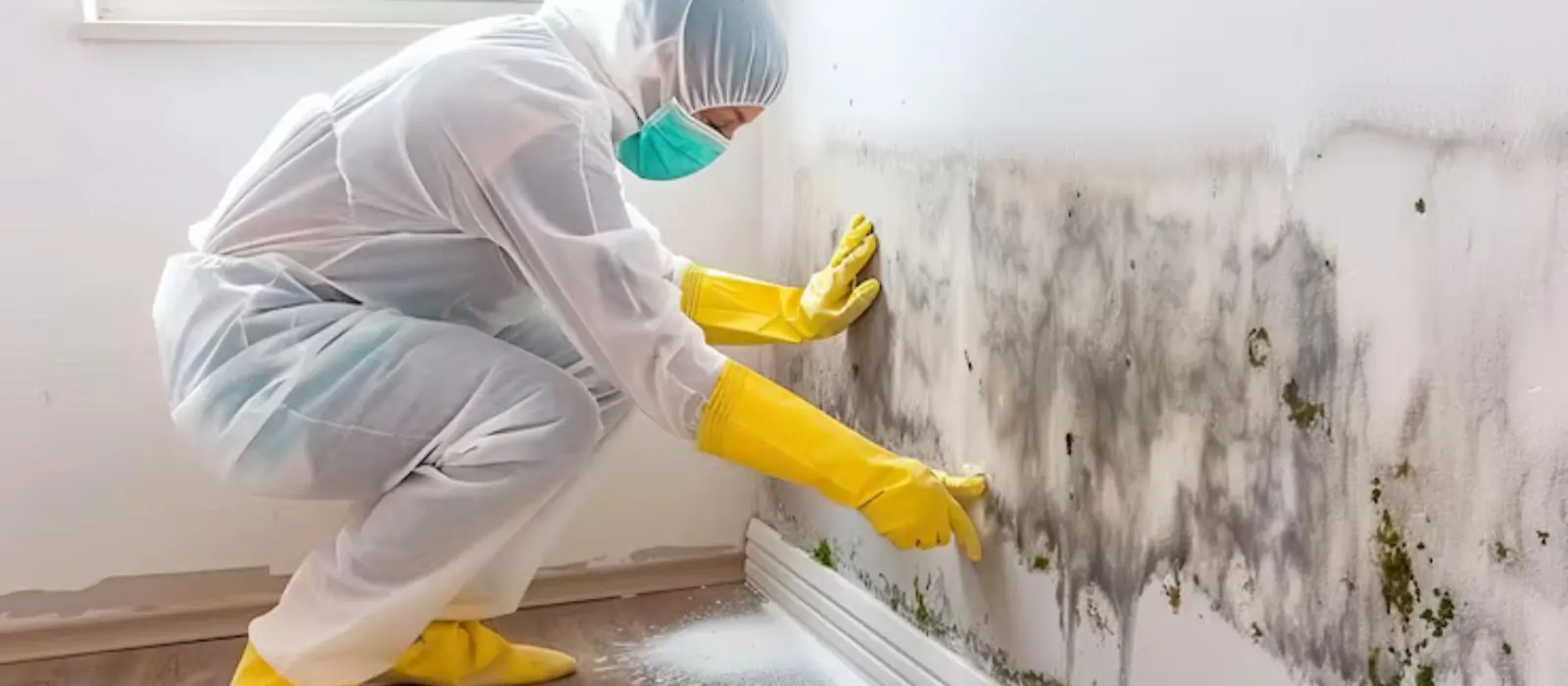
Getting rid of mold in a home is a sequence, and the order matters. First fix the water problem, because mold needs moisture. Then contain the affected area, remove or clean what is contaminated, dry the space, and verify the work before anything is rebuilt. Skipping the first step or the last one is where most failed jobs go wrong.
This page covers the whole-home process. For one small piece of wood, see the narrower steps for cleaning surface growth, and for large or hidden growth plan on professional help.
The sequence from wet to clear
Stop the moisture
Repair the leak, fix the roof, vent the bathroom or drain the crawl space. Nothing else works while water keeps arriving.
Assess the extent
A crew uses moisture meters and a thermal imaging camera to find wet areas behind surfaces, not only visible spots.
Contain the area
Plastic barriers and negative air keep disturbed material from drifting into clean rooms.
Remove and clean
Porous materials like drywall, ceiling tile and carpet pad are cut out and bagged. Solid materials are HEPA vacuumed and wiped.
Dry thoroughly
Air movers and LGR dehumidifiers bring materials back to normal moisture readings.
Verify and rebuild
The area is checked before finishes go back. Then drywall, flooring and paint are replaced.
Professional mold remediation follows ANSI/IICRC S520, the published standard for professional mold remediation. You can ask any company whether its crews work to it and what licenses it holds, then look the license up on the California Contractors State License Board website.
Step one is always the water
If a leak, a failed wax ring, a clogged condensate line or a roof gap is still active, cleaning only buys time. A plumber, roofer or HVAC technician fixes the source. Then the wet materials must dry, and the EPA says to dry or discard wet materials within 24 to 48 hours to limit growth.
That window is why a recent leak calls for water mitigation before anything else. Drying a wall cavity that has been wet for a day is far easier than removing a wall that has been wet for a month.
What gets cleaned and what gets removed
| Material | Usual decision | Why |
|---|---|---|
| Drywall with growth | Remove and replace | Paper facing and gypsum are porous and hard to clean |
| Insulation, carpet pad, ceiling tile | Remove and discard | They hold moisture and cannot be cleaned reliably |
| Framing and subfloor, solid | HEPA vacuum, clean, dry | Solid wood can often stay if it is sound |
| Concrete, tile, metal, glass | Clean and dry | Non-porous or hard surfaces clean well |
| Upholstery and clothing | Case by case | Washable items may be saved, soft furniture often is not |
These are general patterns. A crew makes final decisions on site from the readings and what they see once surfaces are opened. Color of the growth does not identify a species or tell you how serious the job is.
Containment and air control
Removal stirs up dust and spores, so a good crew isolates the work area with sheeting and a negative air machine with HEPA filtration. Doors, vents and returns are sealed, and workers enter through a controlled opening. Without this step, a small job in one room can become a whole-house cleanup.
Ask the company how the HVAC system will be handled. If the air handler or ducts pull from the affected room, that needs to be addressed in the plan. Never run a fan that pulls air out of the work area into the rest of the house.
Want an assessment before you decide?
Call (213) 776-0579 and describe what you see. We will explain what the job involves before work begins.
Clearance: how you know the job is finished
After removal and drying, the area should be inspected before rebuilding. That means visual checks, moisture readings at dry levels, and no musty smell. Some jobs also include post-remediation testing by a separate third party, which avoids a conflict of interest when the same company does the work and the verification.
Before you approve the rebuild
- The moisture source has been repaired and documented
- Moisture readings are at normal levels across the affected area
- Affected materials were removed, bagged and taken away
- The area was HEPA vacuumed and wiped
- Containment came down only after inspection
- You have the written scope, photos and final readings
No honest company can promise mold will never return, because a future leak can create new growth. What keeps it away is a dry building and quick action when something gets wet.
Permits, drying time and South Gate homes
The South Gate Building and Safety Division at 8650 California Avenue, (323) 563-9549, says permits are typically required for repair, alteration and construction, including plumbing, mechanical and electrical work. If mold removal opens walls and you then replace framing, wiring or pipes, ask the division what applies before the rebuild begins, so the schedule is not stalled.
Many South Gate homes date from the early to mid twentieth century, when much of the old farmland was built over. Older plaster, lath and paint can be present in walls that mold has affected. Tell the crew your home's age and ask about testing those materials before demolition.
What changes the price of mold removal
| Factor | How it changes the job |
|---|---|
| Size of the affected area | More material to remove and more containment |
| Hidden growth in walls or crawl spaces | Opening surfaces adds labor and rebuild work |
| Type of material | Porous materials are removed, which adds disposal and rebuild |
| Drying time and equipment | More days and more air movers raise equipment cost |
| Rebuild scope | Drywall, flooring and paint after removal are a separate line |
Treat any exact figure quoted without a site visit as a guess, and expect the rebuild, such as the water damage repair stage, to be priced apart from removal. A written scope with each item listed is what lets you compare two companies fairly. Insurance may cover mold that follows a sudden and accidental water loss, while mold from long-term neglect often is not, so check your policy.
When you can do it yourself and when you cannot
A small patch on a hard surface in a well-ventilated space is a reasonable DIY job with a respirator, gloves and goggles. Anything on drywall, in a ceiling, behind a wall, near an air handler or after sewage should go to a mold remediation professional. If you are in Downey, Paramount or anywhere nearby, the same line applies.
After a major leak, our water damage cleanup work can handle the wet-side of the job while the mold scope is being set. Questions about how mold affects anyone's health belong with a physician, not a contractor.
Questions South Gate homeowners ask about getting rid of mold
Bleach does not fix a moisture problem and does not reach into porous materials. Never mix it with other cleaning products. For anything beyond a small hard-surface spot, removal and drying are the real solution.
It depends on the area and the drying needs. Small jobs can take a day or two, while larger ones with demolition and rebuild take longer. The crew should give you a written schedule.
It depends on the size and location of the work. Containment helps keep the rest of the home separate, but some households choose to stay elsewhere during larger jobs. Ask the crew.
Your insurer decides. Sudden and accidental water events often include resulting mold, while gradual leaks and neglect often are not covered. Read the policy and ask your insurer about any mold limits.
Not usually. The plan is driven by visible growth, moisture readings and the conditions you describe. Testing after cleanup can help verify the work if a third party does it.
It can. Some addresses are served by the City and others by Golden State Water Company, which lists South Gate and Hollydale in its Central Basin West area with a 24-hour line at 1-800-999-4033. Check your bill so you know whom to call to shut off water at the meter.