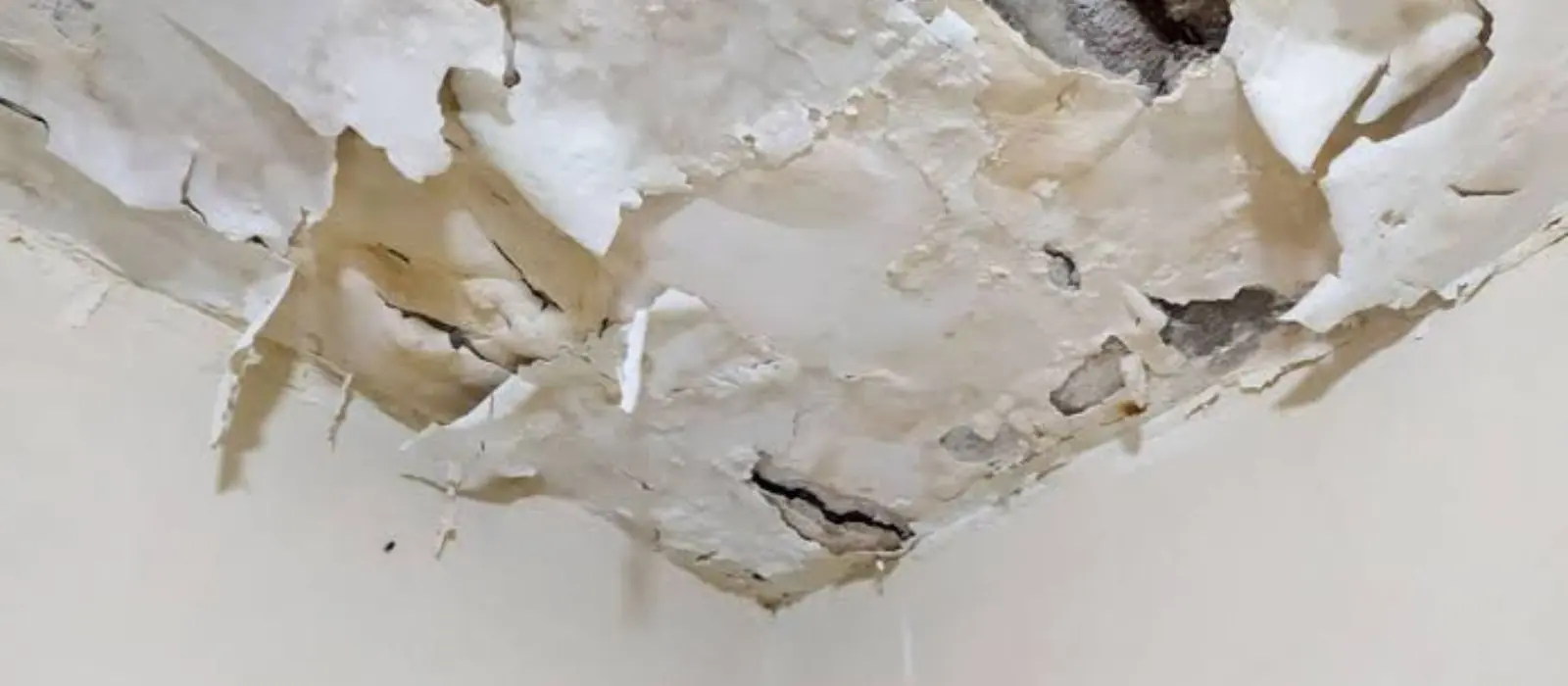
A professional ceiling repair service works in five steps. It confirms the leak has stopped, measures how far the water spread, and dries the framing and insulation above the ceiling. Then it removes drywall or plaster that cannot be saved, and finally rebuilds, textures and paints. The stain you see is usually the smallest part of the job. Most of the work happens in the cavity you cannot see.
What ceiling repair services actually include
People often picture a patch and a coat of paint. A real scope is longer, and each line item exists for a reason. Ask for the scope in writing so you can compare it with any other quote, and see our water damage repair service for how we write ours.
| Scope line | What it means | Why it matters |
|---|---|---|
| Source check | Confirm the supply line, drain, roof or HVAC leak is stopped | Repairs over an active leak fail |
| Moisture mapping | Moisture meter and thermal imaging camera readings across the ceiling and walls | Shows the true wet area, not just the stain |
| Controlled removal | Cutting out sagging, soft or stained drywall or plaster | Wet board cannot be dried back to sound |
| Cavity drying | Air movers and an LGR dehumidifier, sometimes with insulation removal | Wet joists and insulation hold moisture for days |
| Rebuild | New drywall, tape, mud, texture matching | Restores a flat, finished surface |
| Prime and paint | Stain-blocking primer and full-ceiling paint coat | Prevents patch flashing and ghost stains |
How a pro sets the scope
Scope comes from measurements, not from guessing at the stain. The crew checks moisture readings outward from the visible damage until the meter reads dry. Everything inside that boundary gets a decision: dry in place, or remove.
Find the edge
Moisture meter readings are taken in a grid until they match a dry reference spot on the same material.
Look above
A thermal imaging camera and a small inspection cut show insulation, joists and wiring runs that stay hidden from below.
Classify the water
Clean supply water, gray water and sewage are handled differently, and the category changes what gets thrown away.
Decide dry or remove
Sagging, crumbling or stained-through board comes out. Firm, dry board near the edge can stay.
Write it up
The estimate lists what is removed, what is dried, what is rebuilt and what is painted, with photos of the readings.
When you need a pro and when a patch is enough
A small, dry, brown ring from an old leak that has been fixed can be sealed and painted. Anything that is still damp, sagging, bubbling or growing is a different job. Use the table as a quick filter.
| What you see | Likely path | Reason |
|---|---|---|
| Dry ring, no sag, leak already fixed | Stain-block primer and paint | No moisture left to manage |
| Damp paint that feels soft | Call a pro | Water is still in the board or cavity |
| Sagging or bulging drywall | Call a pro and keep out from underneath | Wet board can drop without warning |
| Water dripping from a light fixture | Stop and call the utility or 911 if there is any electrical risk | Wiring may be wet |
| Stain returns after painting | Call a pro to find the source | A slow leak or condensation is still active |
| Ceiling below a bathroom or roof leak | Call a pro | Water often runs along joists before it shows |
Electrical safety comes first
If water is dripping near a light fixture, outlet or ceiling fan, stay out of the room. Turn off the breaker only if the panel is dry and you can reach it safely. If you smell gas or see sparks, leave and call 911 or the utility before calling us.
Water coming through the ceiling?
Call (213) 776-0579 any hour. Describe the stain and we will explain the likely next steps.
Drying the cavity above the ceiling
Painting over a wet cavity is the most common reason repairs fail. Insulation acts like a sponge and keeps framing wet long after the surface feels dry. Pros use air movers to push air through the opening and an LGR dehumidifier to pull moisture out of the room.
Drying is checked, not assumed. Readings are logged each visit and equipment stays until the meter matches the dry reference. If the leak came from a burst line or an overflow, the emergency water removal step usually comes first so standing water is gone before ceiling work begins.
What a fair estimate should show
Price depends on the size of the wet area, the water category, how many layers of material are involved, how many days of equipment are needed and how much finish work follows. Texture matching and full-ceiling painting add labor. Rooms with plaster take longer than rooms with standard drywall.
Questions to ask any ceiling repair company
- Does the estimate separate drying from rebuild and paint?
- Will you take moisture readings and share them with me?
- How do you decide which board comes out?
- Do your crews work to ANSI/IICRC S500 for water damage restoration?
- What licenses do you hold? (Look the license up on the California Contractors State License Board website.)
- Who handles permits if the repair touches wiring or plumbing?
- What happens to the estimate if the wet area turns out larger?
Ceiling repair in older South Gate homes
Much of South Gate's former farmland became homes and factories between about 1910 and 1940, and many early homes were owner-built. If your ceiling is plaster over lath, it dries and breaks differently than modern drywall, so tell the crew the age of the home. Ask whether materials should be tested before demolition on an older building.
South Gate Building and Safety, at 8650 California Avenue, (323) 563-9549, says permits are typically required for repairs and alterations, including plumbing, mechanical and electrical work. A ceiling repair that opens up wiring or replaces a leaking line may fall in that group, so ask your contractor who pulls the permit before work starts.
Rebuild, texture and paint
After drying, new board is hung, taped and finished. Texture is matched by eye and by test spray, which is why a patch sometimes looks different under raking light. Primer goes on before paint so old stains do not bleed through.
Painting the entire ceiling plane, edge to edge, hides the transition better than painting a circle. If you want that included, say so when you review the scope. If the leak started with a failed roof or fixture, the same crew can coordinate with water mitigation so drying starts at once.
Questions South Gate homeowners ask about ceiling repair
It depends on drying. Removal and rebuild can be quick, but drying the cavity usually takes several days and must be confirmed with a meter before the ceiling is closed. Finishing coats need time between steps as well.
Only if the area is completely dry, the leak is fixed and the board is firm. Paint over a damp ceiling traps moisture and the stain tends to return.
Sudden and accidental damage, like a burst supply line, is often covered. Gradual leaks and neglect often are not, and flood is usually excluded. Check your policy or ask your insurer before work begins, and photograph everything.
Cosmetic drywall and paint may not, but work that touches plumbing, electrical or structure often does. South Gate Building and Safety at (323) 563-9549 can tell you what applies to your address.
Only if it is safe and you can stand out of the line of drop. A small hole lets trapped water drain into a bucket, but do not do it near lights or wiring. If in doubt, call us first.
Yes, the same crews work across the area, including Downey and Lynwood.
Crews also serve Huntington Park. Call (213) 776-0579 and give the address, and we will tell you what to expect for the scope.