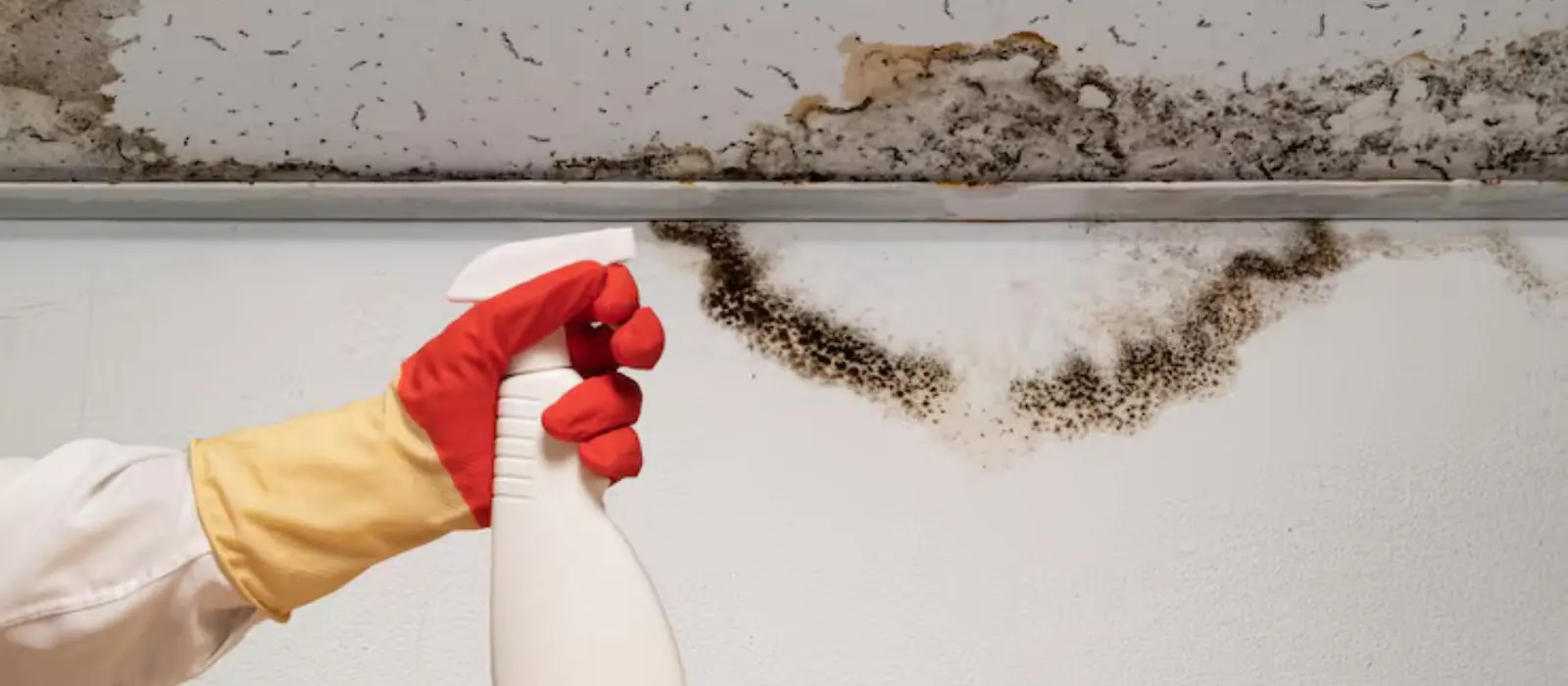
Dark spots on a bathroom ceiling are most often mold growing on a surface that stays damp. Whether it is "dangerous" is not something color can answer. Black, green, gray and brown growths can all be the same organism, and different ones can look identical. Health questions belong to a physician. What you can control is the moisture feeding it.
Myths and facts about black mold
| Common belief | What is true |
|---|---|
| Black means the toxic kind | Color does not identify a species. Only lab work on a sample can, and even then the practical response is the same |
| Bleach kills it for good | Bleach on porous drywall or paint does not reach the roots and leaves moisture behind. Never mix it with other cleaners |
| A test kit tells me how dangerous it is | A kit shows that mold is present, which you already know. It does not replace fixing the moisture |
| If I wipe it, it is gone | Growth on porous material often returns when the ceiling stays damp |
| Mold only grows after floods | A weak exhaust fan and daily hot showers can supply enough moisture |
None of this means you should ignore it. It means you should treat the cause, which is water, before you worry about the label on the mold.
Why bathroom ceilings grow mold
Mold needs moisture, an organic surface and time. A bathroom supplies all three. Hot shower steam condenses on the coolest surface in the room, which is often the ceiling, and ordinary paint and drywall paper give it something to feed on.
- An exhaust fan that is weak, clogged or not vented outside
- Showers without the fan running during and after use
- A plumbing leak or failed shower pan in the room above
- A roof leak or condensation in the attic
- Missing or damaged insulation that leaves the ceiling cold
If the dark patch sits in one corner and grows after rain, suspect the roof. If it spreads from the fan or the shower, suspect ventilation. If the drywall is stained brown and soft, a leak is likely and the damage goes deeper than the surface.
Can you clean it yourself?
A small patch on a hard, painted surface, with no soft drywall and a known cause that has been fixed, is a reasonable do-it-yourself job. Anything larger, any ceiling that is soft, or any case where you cannot find the moisture source needs a pro.
Protect yourself and never mix chemicals
Wear an N95 respirator, goggles and gloves, and ventilate the room. Do not combine bleach, ammonia, vinegar or other cleaners. Mixing them can release dangerous gases.
Stop if anyone in the home has breathing concerns, and ask a physician about health questions. Do not scrub dry mold, which sends spores into the air.
A careful cleaning method for small surface patches
- Fix the moisture source first. Cleaning before repair only resets the clock.
- Run the exhaust fan, open a window and keep the door closed to the rest of the home.
- Lightly mist the area with plain water to keep dust down.
- Wipe with a damp cloth and a small amount of dish detergent in water. One product at a time.
- Dry the surface completely with a clean towel and a fan.
- Bag the cloths and wipe the area again with plain water.
- Keep watching it for several weeks. If it returns, the ceiling is still damp or the material is compromised.
Spots coming back after cleaning?
Call (213) 776-0579. We will help you work out whether it is a moisture problem or a remediation job.
Afterward, lower the load on the ceiling. Run the fan during every shower and for a while after, make sure it vents outside rather than into the attic, and wipe condensation from cold surfaces. If a fan barely moves a tissue held to the grille, it is undersized or clogged and worth replacing.
Signs this is beyond a wipe-down
Call a remediation company if you see
- Growth larger than a small patch, or spread across more than one area
- Drywall that is soft, stained brown, bubbling or sagging
- A musty smell with no visible source
- Growth that returns within weeks of cleaning
- A leak you have not been able to find
- Water damage that has been sitting longer than 48 hours
The EPA advises drying or discarding wet materials within 24 to 48 hours to limit mold growth. Past that point, porous material such as ceiling drywall and insulation are usually removed rather than cleaned. If a pipe or roof leak is still running, emergency water removal comes before any mold work.
What professional remediation involves
Professional mold remediation follows the published ANSI/IICRC S520 standard. Ask any company whether its crews work to it. The process is mostly about control: stopping moisture, keeping spores contained, removing what cannot be cleaned, and checking that the job worked.
Find and stop the moisture
A moisture meter and thermal imaging camera map where water is and where it came from.
Contain the area
Plastic sheeting and negative air keep disturbed material from reaching the rest of the home.
Remove affected material
Damaged drywall and insulation are cut out and bagged, with HEPA vacuuming and cleaning of what stays.
Dry and rebuild
Air movers and dehumidifiers dry the cavity before new board, primer and paint go on.
The rebuild is ordinary water damage repair: new drywall, taping, stain-blocking primer and paint. The difference is that it happens only after readings confirm the cavity is dry and the cleanup has been checked.
Our mold remediation service covers this process. If the root cause is a leak above the bathroom, water mitigation comes first, because there is no point removing mold from a ceiling that is still getting wet.
South Gate details that matter for a bathroom ceiling
Bathroom mold in South Gate homes and rentals
Many South Gate homes date to the 1910 to 1940 building boom, and some older bathrooms still have original or early plumbing above the ceiling. Tell a crew the home's age and ask about testing materials before demolition, because older paint and plaster can change how the ceiling should be opened.
Mold work may touch plumbing, electrical or structure, so ask South Gate Building and Safety at (323) 563-9549 whether a permit applies before the ceiling is rebuilt. When hiring, ask what licenses the company holds and look the license up on the California Contractors State License Board website.
Questions South Gate residents ask about bathroom ceiling mold
Color cannot tell you. Whether mold affects anyone's health is a question for a physician, not for a paint color. The practical response is the same for any mold: find the moisture, fix it and have the growth cleaned or removed properly.
A test can confirm what is growing, but it does not fix the moisture, and the cleanup steps are usually the same whatever the result. A moisture assessment of the ceiling is often more useful.
No. Paint over mold on a damp ceiling can peel, and the growth can continue underneath. Clean or remove it, dry the surface and prime it first.
Nobody can promise it will not. Mold needs moisture, so if the ceiling stays damp or the fan stays weak, growth can return. Fixing the source is what lowers the chance.
It often depends on the cause. Mold that follows a sudden, accidental leak may be treated differently from mold caused by long-term humidity. Check your policy and ask your insurer before work begins.
In Lynwood, 46.6 percent of occupied homes are owner-occupied, and in Paramount, 57.1 percent are renter-occupied. For renters, that means building repairs usually run through a landlord.
Report the mold and the moisture source in writing, with dated photos, and keep a copy. Do not scrub or demolish anything in a rental before the landlord has seen it.