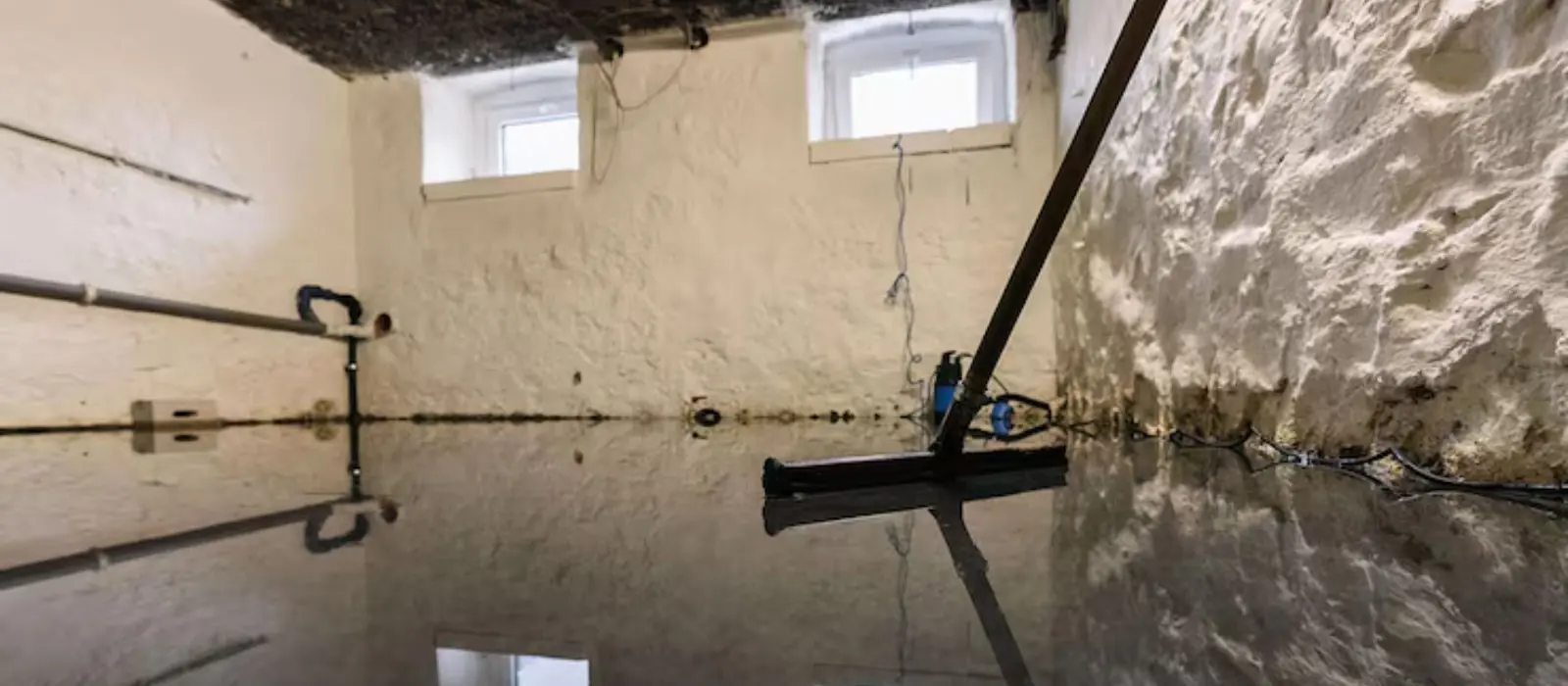
Flood cleanup services for a basement, below-grade garage or crawl space do five things: make the space safe, pump out the water, remove materials that cannot be saved, dry and sanitize what remains, and document the loss. The order matters, and the first step is not yours to rush. Water in a low space can hide electrical, gas and contamination hazards.
Safety before anything else
Do not walk into standing water
Water below grade can reach outlets, appliances, a panel or a furnace. If the water is above outlet height or touching any electrical equipment, stay out. Cut power at the main only if the panel is dry and reachable without wading. If it is not, call the utility or 911 before you call us.
If you smell gas, leave and call the gas utility or 911. Never run a gasoline pump or generator indoors, because exhaust contains carbon monoxide.
Floodwater and sewage backup can carry bacteria. Avoid skin contact, keep children and pets out, and do not use household fans to dry it before the source is identified.
While you wait for the crew, keep your actions simple and safe. Photograph the water line on walls and stored items from the doorway. Move anything you can lift from upper stairs and dry floors, and take medications, documents and valuables out of the house. Write down when you first noticed the water and what you think caused it.
What flood cleanup services actually do
Assess and shut off the source
The crew checks where the water came from, whether it is still entering and whether utilities are safe.
Pump and extract
Truck-mounted or portable pumps and extraction units remove standing water, usually in stages so structure is not stressed.
Remove what cannot be saved
Carpet, pad, wet drywall, insulation and soaked belongings are cut out and bagged, especially after contaminated water.
Dry the structure
Air movers and LGR dehumidifiers run until moisture meters show normal readings in framing and concrete.
Clean and sanitize
Surfaces are cleaned and treated, and odor is addressed once drying is under way.
Document and plan rebuild
Photos, readings and an inventory support insurance conversations and the rebuild scope.
Basement, garage and crawl space compared
| Space | Main challenge | Typical approach |
|---|---|---|
| Finished basement | Drywall, carpet and furniture absorb water | Pump, remove wet finishes, dry framing and slab, rebuild |
| Unfinished basement | Concrete and stored boxes hold moisture | Pump, remove stored items, dry, clean and sanitize |
| Below-grade garage | Vehicles, fuel and chemicals in the water | Check hazards first, pump, wash down, dry |
| Crawl space | Hard access, wet insulation, joists and subfloor above | Pump, remove insulation, dry joists and subfloor, check vapor barrier |
Crawl spaces deserve extra attention. Wood joists and subfloor that stay damp can rot or grow mold quietly, out of sight, so crews measure moisture in the framing and not just the air.
Water in a below-grade space?
Call (213) 776-0579. Tell us how high the water is and whether the power is on.
Where the water came from changes the plan
Clean supply water from a broken line is treated differently from rainwater entering through a window well, and both differ from sewage backing up through a floor drain. Industry standard ANSI/IICRC S500 sorts water into categories, and the category sets what can be dried and what must be thrown out.
- Supply line or water heater failure: usually the cleanest category, though it degrades with time.
- Groundwater or storm entry: treated as contaminated, so porous materials are normally removed.
- Sewage backup: contaminated from the start. Do not clean it yourself.
- Failed sump pump: depends on what the water picked up on its way in.
Ask any company whether its crews work to S500 and how it classified your loss. A clear answer is a good sign.
What can usually be saved and what usually cannot
Salvage rules of thumb after flood contamination
- Often saved: concrete slabs, solid wood framing, metal and hard plastic items that can be cleaned
- Often removed: carpet and pad, drywall, insulation, particle board, upholstered furniture
- Case by case: hardwood, solid wood furniture, documents and photos (some can be professionally dried)
- Never reused: food, medicine and anything absorbent that sat in sewage
Remove ruined belongings only after you have photographed them. If the water was contaminated, our water damage cleanup service handles the sanitizing and odor control once the space is dry. The first pumping and extraction step is covered under emergency water removal.
A working sump pump is not the end of the story. If the pump failed, the float stuck or the discharge line clogged, the same water can return after cleanup. Have the pump, check valve and discharge line tested as part of the rebuild plan, and ask the crew to note where water entered so the repair addresses the entry point.
Why speed matters below grade
Low spaces dry slowly because air does not move well and concrete holds water. The EPA advises drying or discarding wet materials within 24 to 48 hours to limit mold growth, which is hard to meet without equipment. Early water mitigation with a dehumidifier sized to the space is what keeps a wet basement from turning into a mold job.
Insurance and flood coverage in South Gate
Flood, insurance and South Gate
The Los Angeles River runs through the eastern part of South Gate. Check the FEMA Flood Map Service Center for your address and ask your insurer whether you have flood coverage, because a map reading does not tell you what your policy pays.
The California Department of Insurance says homeowners policies typically exclude flood, mudslide and debris flow. Flood coverage comes from the National Flood Insurance Program, whose policies generally take effect 30 days after purchase, so buying one after a storm is forecast is too late. The CDI hotline is 1-800-927-4357 and the NFIP claims line is 1-800-638-6620.
Rebuilding below grade can involve plumbing, electrical and structure. South Gate Building and Safety, at 8650 California Avenue and (323) 563-9549, says permits are typically required for those, so ask before the rebuild starts.
Questions South Gate property owners ask about basement flooding
Only if the power is off and the space is safe to enter. Pumping a flooded basement too quickly can stress walls and floors, so a slow, staged pump-out is safer. Avoid sewage water entirely and call for help.
Several days is common, but the time depends on how much water entered, what materials are wet and how well air can move. Daily moisture readings decide when drying is finished.
No honest figure exists before an inspection. Price depends on the water category, the area affected, the materials removed, equipment days and whether rebuilding is included.
It depends on the cause. A sudden burst pipe is often covered, while surface flood is usually excluded. Gradual seepage often is not. Check your policy and ask your insurer.
Mold needs moisture and time, so fast drying matters. If growth appears, mold remediation follows the S520 standard and starts by stopping the moisture.
Downey sits between the Rio Hondo and the San Gabriel River. Proximity to a river says nothing about your own flood risk, so check the FEMA Flood Map Service Center for your exact address and talk to your insurer about coverage.
The city's Public Works Utilities Division, at (562) 904-7202, is the contact for water system problems, and its after-hours line, (562) 448-8936, is for urgent matters. Paramount residents served by Golden State Water can use its 24-hour line, 1-800-999-4033.